
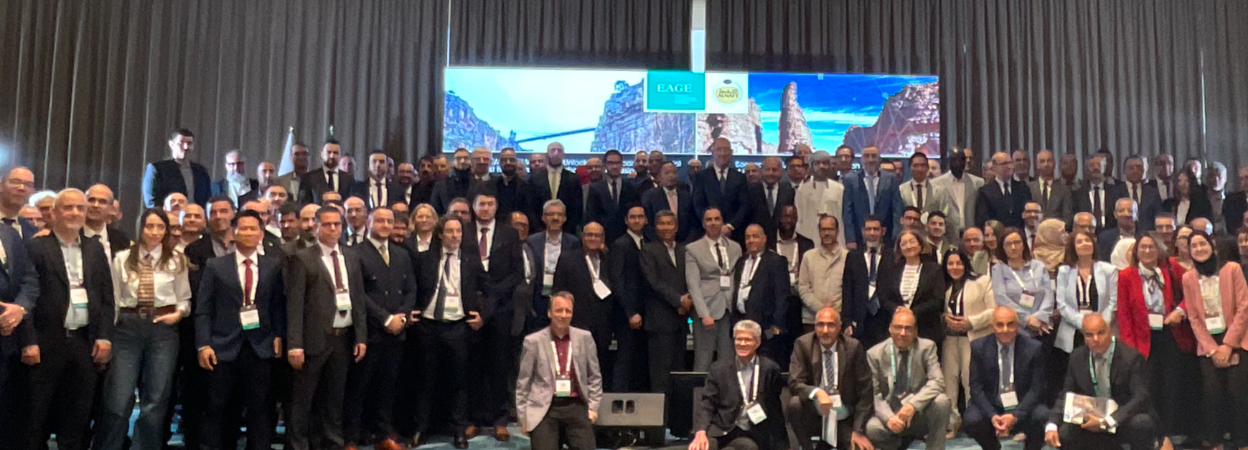
Algeria has long been one of Africa's leading hydrocarbon producers, yet much of its future production will come not from discovering entirely new fields, but from recovering more from those already in operation. This was the central message emerging from the Second EAGE/ALNAFT Workshop on Techniques of Recovery of Mature Fields and Tight Reservoirs, held 11–13 May 2026 in Algiers, Algeria.
Bringing together more than 100 delegates from operators, regulators, academia, service companies and research organisations, the workshop focused on a timely question: how can Algeria maximise the value of its mature assets while preparing for the next generation of exploration and development?
The answer was clear: the country's greatest opportunity lies in combining decades of operational experience with modern subsurface technologies, digital workflows and closer collaboration across the entire upstream ecosystem.
From mature producer to smarter producer
Algeria's upstream sector is built on more than 70 producing mature oil fields, particularly across the Saharan basins. Many already benefit from extensive production infrastructure and established water and gas injection schemes. Rather than viewing these assets as approaching the end of their economic life, speakers repeatedly highlighted their potential for redevelopment through improved reservoir understanding and more sophisticated recovery techniques.
The workshop demonstrated that extending field life is no longer simply an engineering challenge. It requires integrating geology, geophysics, reservoir engineering and production data to identify hydrocarbons that earlier development strategies were unable to recover efficiently.
Tight reservoirs are moving into the spotlight
While mature oil fields remain a national priority, considerable attention was also devoted to Algeria's tight sandstone resources, particularly the Cambro-Ordovician reservoirs that are increasingly attracting industry interest.
Participants agreed that these reservoirs cannot simply be developed by importing workflows that have proven successful elsewhere. Instead, international experience must be adapted to Algeria's own geological conditions, combining detailed subsurface characterisation with stimulation strategies and production optimisation tailored to local reservoir behaviour. This emphasis on geological understanding before operational execution emerged as one of the workshop's strongest themes.
Carbonates demand geological understanding above all
Carbonate reservoirs formed another major focus of discussion, reflecting both their importance within Algeria and the technical complexity they present.
Rather than searching for universal solutions, speakers stressed that recovery strategies must be designed around each reservoir's individual characteristics. Fracture systems, matrix properties, wettability and heterogeneity all determine whether enhanced oil recovery methods such as polymer, surfactant or gas injection can deliver meaningful improvements.
The message resonated throughout the workshop: successful carbonate development begins with understanding the rock before selecting the technology.
Digitalisation is reshaping mature field management
Artificial intelligence and digital technologies were presented not as future ambitions but as increasingly practical components of reservoir management.
Advanced seismic interpretation, fracture characterisation, reservoir surveillance, integrated static and dynamic modelling, and AI-enabled data management are helping operators reduce uncertainty and make faster, better-informed decisions. However, delegates repeatedly cautioned that digital tools only create value when grounded in sound geological interpretation and multidisciplinary collaboration.
Recovery and sustainability are becoming complementary objectives
Another notable shift was the growing integration of sustainability into discussions about mature field redevelopment. Sessions addressing CO₂ injection, enhanced recovery methods and long-term reservoir management illustrated how increasing recovery factors can simultaneously improve resource efficiency while making better use of existing infrastructure. Rather than treating environmental performance as separate from production objectives, many contributors viewed efficient recovery itself as an important element of more sustainable resource development.
A broader vision for Algeria's upstream future
The workshop also reflected a broader strategic evolution within Algeria's upstream sector. Alongside discussions on mature fields, the event marked the launch of the inaugural EAGE/ALNAFT Workshop on Unlocking Hydrocarbon Potential of the West Mediterranean Offshore Frontier Basin of Algeria, signalling an expansion of the long-standing EAGE–ALNAFT partnership beyond redevelopment towards frontier offshore exploration. Together, the two meetings illustrated a balanced national strategy: maximise recovery from established assets while simultaneously preparing the next generation of exploration opportunities.
This dual focus was reinforced by ALNAFT's emphasis on strengthening cooperation between government, operators, academia and technology providers. Creating an attractive investment environment, encouraging technology adoption and promoting knowledge exchange were consistently identified as essential ingredients for maintaining Algeria's competitiveness in an evolving global energy landscape.
Looking ahead
The workshop showed that Algeria's future production will depend less on finding entirely new resources than on unlocking more value from reservoirs that have been producing for decades. Achieving that goal will require increasingly integrated subsurface workflows, reservoir-specific recovery strategies, digital innovation and sustained collaboration across the industry.
For Algeria, the challenge is no longer simply producing hydrocarbons. It is producing them more intelligently, more efficiently and with a deeper understanding of one of the country's greatest strategic assets: its subsurface.
EAGE and ALNAFT sincerely thank all participants, panelists, speakers, volunteers, session chairs, and members of the Technical Committee, whose dedication and contributions once again made this edition a valuable platform for technical exchange, innovation, and partnership. We extend our heartfelt gratitude to our generous sponsors: Pertamina, OXY, Baker Hughes, Halliburton, TotalEnergies, and Petrogas E&P, whose invaluable support and commitment played a key role in the success of this workshop.

