
Shearwater expects marine seismic activity to remain subdued in the third quarter of 2026, but says a strengthening project pipeline and recent contract awards are improving visibility for the final quarter of the year and into 2027.
In its second-quarter report, the company said the low level of contract awards during the first half of 2026 continued to affect vessel scheduling. Although tendering activity and the pace of awards have since increased, Shearwater cautioned that these have not yet translated into sufficient operational activity to indicate a broader market recovery.
The change in momentum is reflected in the company’s backlog. This stood at $212.6 million at the end of June, compared with $271.7 million three months earlier and $319 million at the end of June 2025. By mid-August, however, new project awards and multi-client commitments had lifted the backlog to $401 million.
The additions include streamer and ocean-bottom node projects. Two recently awarded 3D surveys offshore India account for 15 vessel-months and provide work for two vessels into 2027. Shearwater believes India’s wider exploration programme, led by the Directorate General of Hydrocarbons, could eventually absorb a meaningful share of available global 2D seismic capacity and contribute to tighter market conditions.
The company nevertheless expects the recovery to remain gradual. Competitive conditions have placed pressure on pricing over recent years, although Shearwater reported improving margins on its latest awards. It is continuing to align fleet capacity with demand, including stacking vessels with limited near-term utilisation prospects and considering selective vessel sales.
Shearwater operated an average of 7.7 active vessels during the second quarter, including one OBN crew, with fleet utilisation of 76%. Quarterly revenue increased to $148.7 million from $133.8 million a year earlier, while EBITDA rose from $11.9 million to $22.6 million, supported in part by $23 million in multi-client revenue.
The multi-client business remains an important element of the company’s strategy. Following the third acquisition season offshore Brazil, its Pelotas Basin library now comprises approximately 17,000 km² of wide-tow 3D seismic data.
Looking further ahead, Shearwater describes the outlook for marine seismic as constructive. It points to declining conventional discovery volumes, reserve replacement failing to keep pace with production decline and growing concerns over long-term production capacity and energy security as factors likely to support renewed exploration investment.
“While the very near-term outlook remains subdued, the main drivers of seismic demand continue to strengthen,” said CEO Irene Waage Basili.
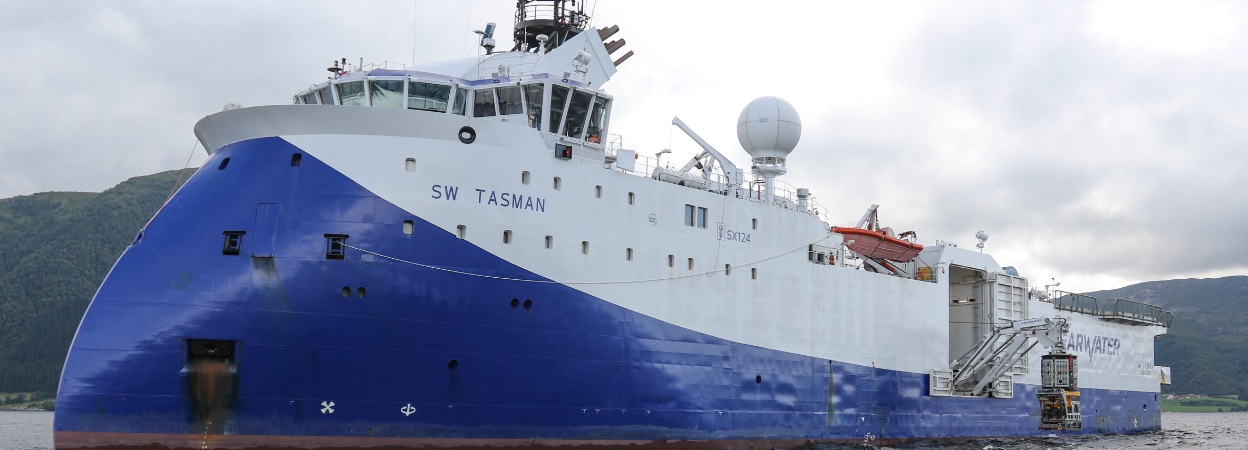
Image courtesy of Shearwater

