
RWE has raised its earnings forecasts for 2026 and 2027 following stronger operational performance, improved wind conditions and an increased stake in German transmission system operator Amprion.
The German energy company expects adjusted EBITDA of between €5.75 billion and €6.35 billion in 2026. For 2027, the forecast has been raised to between €6.7 billion and €7.3 billion.
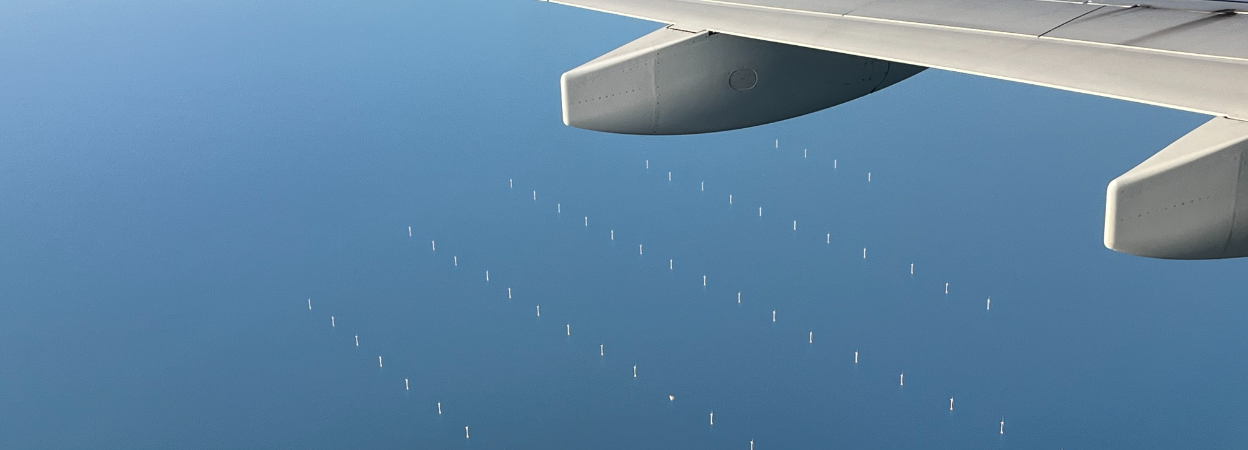
Offshore wind was one of the main contributors to the improved first-half performance. The division is expected to report adjusted EBITDA of €810 million for the first six months of 2026, compared with €643 million in the same period last year. RWE attributed the increase primarily to higher electricity generation as wind conditions returned to more typical levels following unusually weak conditions in early 2025.
The company has consequently raised its full-year 2026 earnings guidance for offshore wind by €100 million, to between €1.65 billion and €2.15 billion.
RWE’s onshore wind and solar business is expected to report first-half adjusted EBITDA of €1.02 billion, up from €830 million a year earlier. This improvement was supported by the expansion of generation capacity and more favourable wind conditions in Europe, although currency movements partly offset the gains.
The company also expects additional earnings from increasing its interest in Amprion to a pro-rata share of 55%. From 2027, the grid operator’s contribution will be reported under a new Regulated Grid Infrastructure business segment.
Preliminary figures indicate that RWE generated adjusted EBITDA of €3 billion and adjusted net income of €1.3 billion during the first half of 2026. The company will publish its complete interim results on 13 August.
RWE’s results highlight both the potential of offshore wind and the operational, technical and infrastructure challenges involved in expanding the sector. The geoscience contribution to this expansion will be examined at the EAGE Offshore Wind Energy Conference, held under the GET2026 umbrella event in Hannover, Germany, in November 2026.
The conference will bring together geoscientists, engineers, developers, survey contractors and researchers to discuss geophysical acquisition, seismic processing and inversion, ground modelling, seabed characterisation, geohazard assessment and the application of AI and machine learning to offshore wind projects.

