
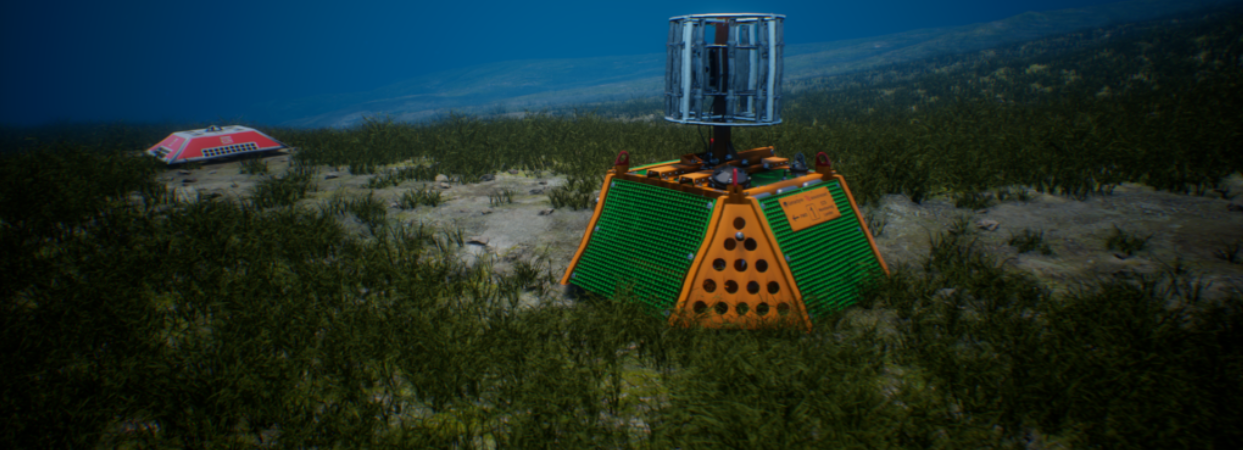
Sonardyne has commenced baseline environmental and passive seismic monitoring for the UK’s first commercial-scale offshore carbon storage project. Working on behalf of the Northern Endurance Partnership (NEP), the Kraken Robotics company deployed six seabed lander systems at the Endurance CO2 store, located 150 km off the coast of Teesside in the Southern North Sea.
NEP—an incorporated joint venture operating on behalf of shareholders bp, Equinor, and TotalEnergies—is developing the onshore and offshore infrastructure needed to transport CO2 from carbon capture projects across the East Coast Cluster (Teesside and the Humber) to secure subsea storage. Providing access to up to 1 billion tonnes of CO2 storage capacity via the Endurance saline aquifer and adjacent stores, this infrastructure is crucial to achieving net zero in the UK’s most carbon-intensive industrial regions.
The recent deployment consists of three autonomous environmental monitoring landers built by Sonardyne, co-located with three TIAMAT passive seismic monitoring systems from K.U.M. These long-endurance systems use edge data processing and wireless underwater communications to remotely collect data on seawater chemistry, currents, and micro-seismic activity. Establishing this robust baseline data before CO2 injection begins is a critical component of NEP’s long-term measurement, monitoring, and verification (MMV) programme.
Image courtesy of Sonardyne.

