
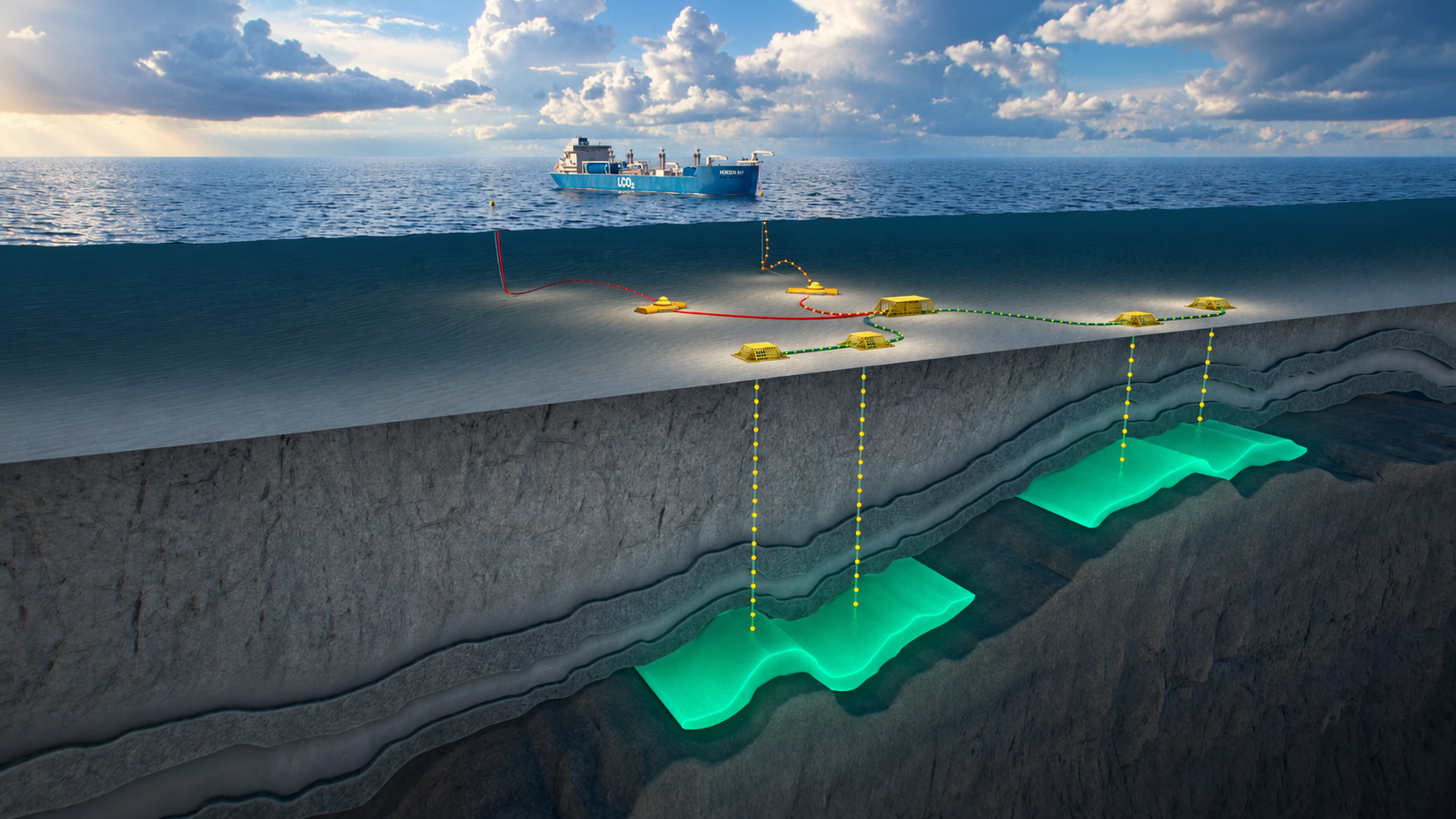
Aker BP and Höegh Evi have been awarded €223 million from the EU Innovation Fund to develop the Atlas CO₂ transport and storage project on the Norwegian Continental Shelf. The proposed network would connect European industrial emitters to offshore storage in the Norwegian North Sea.
Saline aquifer targeted for storage
The storage site is in the EXL011 licence, operated by Aker BP, which holds an 80% interest alongside ORLEN Upstream Norway with 20%. The project plans to inject CO₂ through subsea infrastructure into a saline aquifer more than 2,000 m below the seabed. Aker BP estimates storage capacity at approximately 150 million tonnes, with a reference injection rate of 6 million tonnes per year and further expansion potential.

For subsurface teams, a notable project milestone is the removal of an appraisal-well commitment from the EXL011 work programme. Aker BP says Norway’s Ministry of Energy approved this in April 2026, reflecting the maturity of existing subsurface data and technical studies. The project has also passed Aker BP’s subsurface validation point; its environmental impact assessment programme is now in public consultation.
The transport concept would aggregate and condition captured CO₂ near industrial customers, move it by dedicated low-pressure carriers, then offload it into subsea infrastructure for direct injection. This would avoid the need for fixed offshore facilities, an offshore pipeline and intermediate onshore storage.
Atlas is in the Select phase. The partners are targeting a final investment decision in 2028 and first injection from 2031; the EU funding is subject to FID.
Image courtesy of Aker BP

