
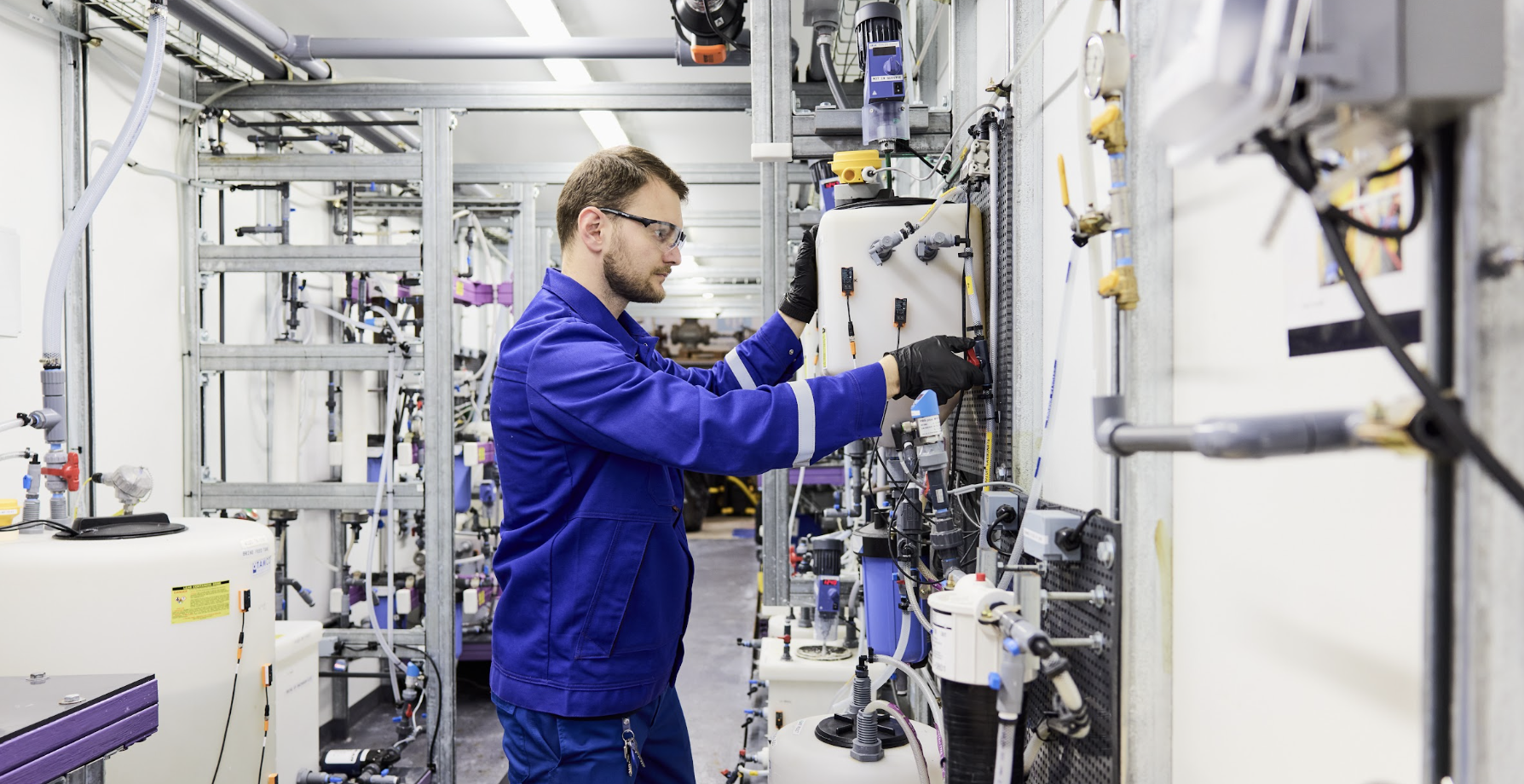
The European Commission’s latest Strategic Project designation brings new attention to Neptune Energy’s lithium plans in Saxony-Anhalt. At GET 2026, delegates will be able to examine the project’s geology and direct lithium extraction work first-hand.
The European Commission has selected Neptune Energy’s Altmark Lithium Extraction (ALE) project as one of 46 new Strategic Projects under the Critical Raw Materials Act. The projects, located across 16 EU member states, cover 15 strategic raw materials and are expected to require about €21.1 billion in investment. The designation is intended to support Europe’s efforts to develop domestic supply chains, including through more coordinated permitting and improved access to finance. It does not guarantee project funding or approval. ec.europa.eu
For geoscientists, ALE is a notable example of how legacy hydrocarbon assets and subsurface expertise could contribute to the supply of battery materials. In the Altmark region of Saxony-Anhalt, Neptune aims to extract lithium from deep subsurface brines associated with a developed natural gas field. The project is testing direct lithium extraction (DLE) technologies, which separate lithium from brine brought to the surface; remaining water can then be returned to the reservoir. Neptune Energy

The project’s selection comes as the EU seeks to strengthen its capacity across the critical raw materials value chain. Under the Critical Raw Materials Act, the bloc’s 2030 benchmarks include meeting 10% of annual consumption through domestic extraction, 40% through processing and 25% through recycling. Achieving those goals will depend not only on identifying resources, but also on understanding reservoir characteristics, developing workable extraction methods and integrating them with existing infrastructure.
GET 2026 field trip to Project ALE
Project ALE will also feature in the programme of the EAGE Global Energy Transition Conference & Exhibition (GET 2026), where Neptune Energy Innovations is host sponsor. A field trip to the Altmark site is scheduled for Monday 2 November, ahead of the conference in Hannover.
Participants will visit the project area and hear about its geological setting, subsurface development and DLE pilot work, including the Fraunhofer IEG pilot. The programme is designed to show how established gas-field knowledge and infrastructure may be applied to a different resource and an emerging battery supply chain.
More information on the fieldtrip and the GET2026 event here.

