
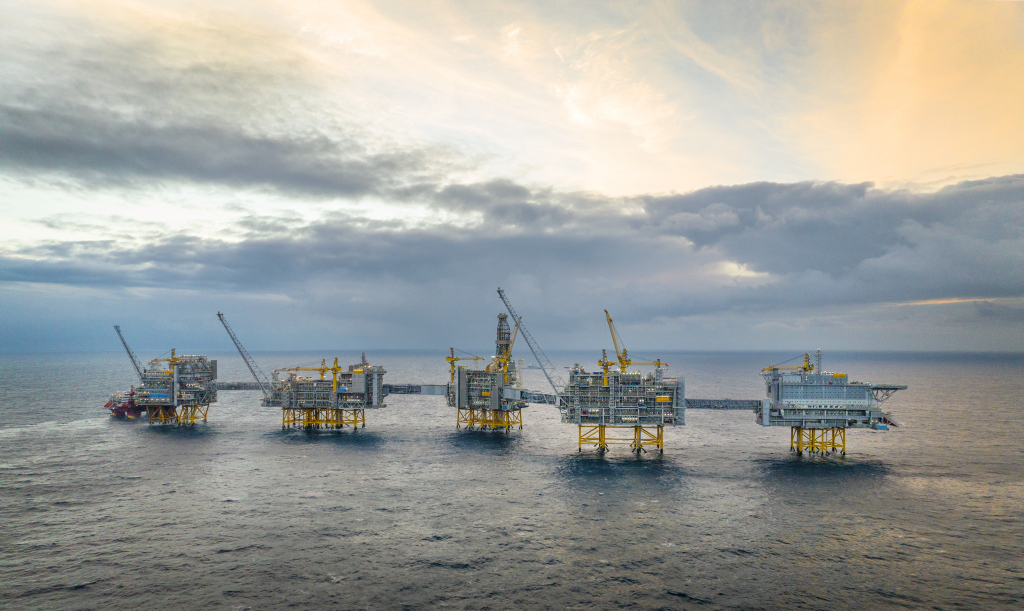
At its recently held Capital Markets Day 2026, Equinor outlined a strategy centred on growing energy production, increasing cash flow and delivering higher shareholder returns. For subsurface professionals, the most notable announcements relate to the company’s plans for the Norwegian Continental Shelf (NCS), where Equinor intends to further increase production through accelerated field development, increased recovery initiatives and sustained exploration activity.
The company has raised its NCS production outlook by 100,000 barrels of oil equivalent per day (boe/d), targeting production of 1.35 million boe/d by 2030 and 1.3 million boe/d by 2035. Overall corporate production is expected to reach 2.3 million boe/d by 2030, representing an increase of 150,000 boe/d compared with current expectations.
Equinor describes the NCS as the backbone of its business and plans to allocate around 60% of capital expenditure to the region over the coming years. A key element of the strategy is the industrialisation of subsea developments, with the company aiming to sanction between six and eight new tie-back projects annually through 2035. Many of these opportunities are expected to be based on existing infrastructure, allowing for rapid project maturation, lower costs and shorter payback periods.
Equinor describes the NCS as the backbone of its business
The company highlighted a substantial portfolio of infill, increased oil recovery (IOR) and near-field development opportunities, many with break-even prices below USD 35 per barrel and payback times of less than 2.5 years. Equinor also intends to maintain a high level of exploration activity, with exploration and resource maturation expected to play an important role in sustaining production beyond 2030.
Equinor also intends to maintain a high level of exploration activity
Outside Norway, Equinor plans focused growth in selected international basins, including the United States, Brazil, Angola, Canada and the UK. International oil and gas production is expected to increase by approximately 30% to 950,000 boe/d by 2030, supported by continued exploration and development of non-sanctioned resources.
The strategy underscores the continuing importance of subsurface value creation through improved recovery, near-field exploration, rapid tie-back developments and infrastructure-led exploration. While much attention in recent years has focused on energy transition investments, Equinor’s updated outlook signals a strong commitment to maximising resource recovery from mature basins while leveraging existing infrastructure to deliver competitive returns and energy security.
The company also reiterated its ambition to reduce operated emissions by 50% by 2030 through electrification and energy-efficiency measures, while continuing to grow oil and gas production.
Image: Jonny Engelsvoll / ©Equinor

