
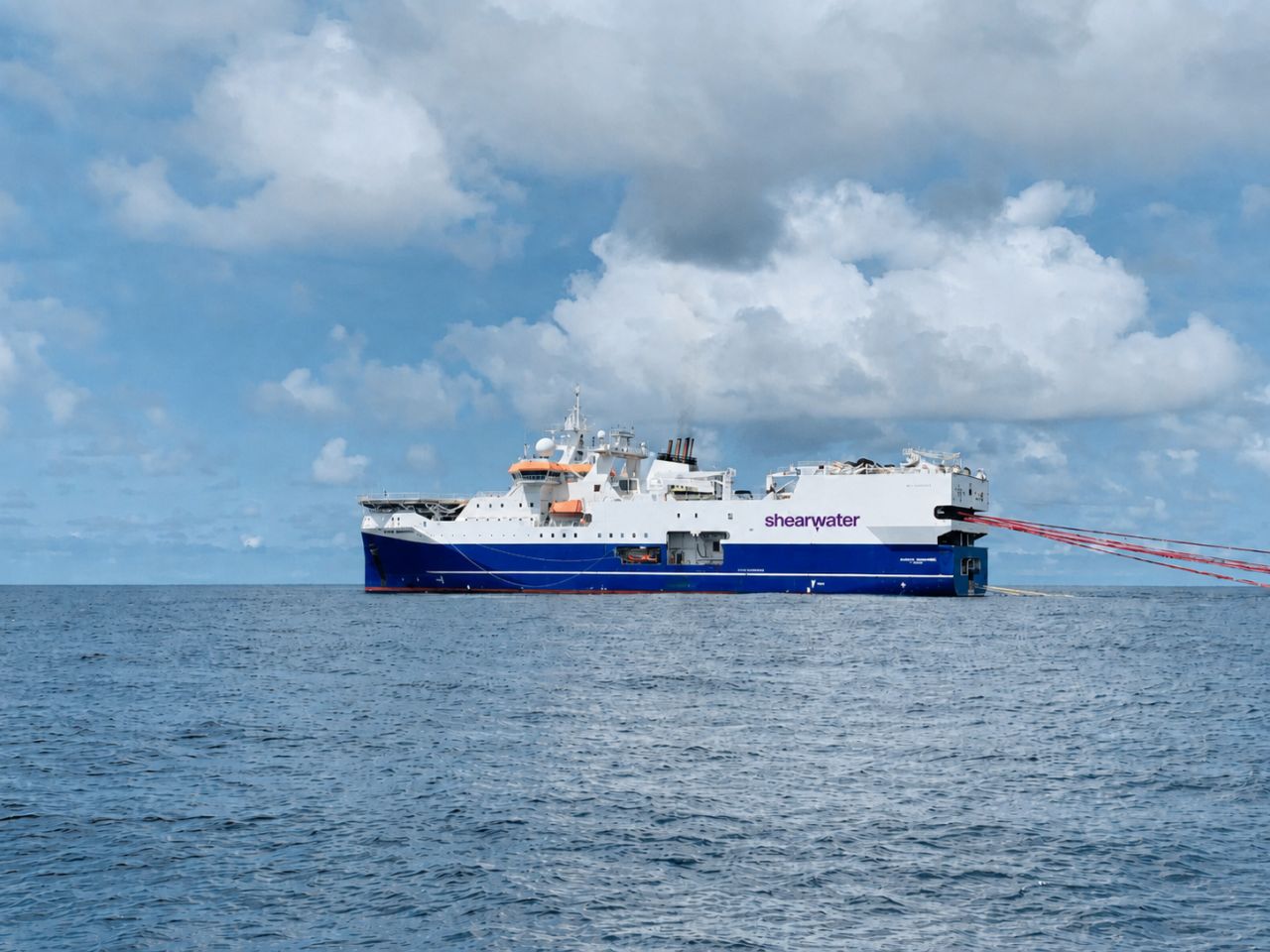
Second-quarter revenue and EBITDA increased despite continued weakness in marine seismic acquisition, while recent awards have strengthened fleet visibility into 2027.
Shearwater Geoservices reported second-quarter revenue of $148.7 million, up from $133.8 million in the same period of 2025, despite continued subdued demand in the marine contract acquisition market.
EBITDA increased to $22.6 million from $11.9 million a year earlier. The company recorded a strong contribution from its multi-client business, which generated $23 million in quarterly revenue.
Fleet utilisation was 76%, based on an average of 7.7 active vessels, including one ocean-bottom node crew. Shearwater expects activity to remain at similar levels during the third quarter following the limited number of contract awards made during the first half of the year.
However, the company said the recent acceleration in contracting has improved its outlook towards the end of 2026 and into 2027. Its order backlog had increased to $401 million by mid-August.
“We anticipate similar activity levels also in the third quarter,” said Shearwater CEO Irene Basili. “However, with the recent increase in the pace of contracting, the outlook towards year-end and visibility into 2027 are improving.”
The backlog includes two recently awarded 3D seismic surveys in India, representing a combined 15 vessel-months of work.
The programmes will secure activity for two vessels into 2027 and mark Shearwater’s eleventh consecutive acquisition season in the Indian market.
During the quarter, Shearwater completed its third multi-client acquisition season in Brazil’s Pelotas Basin. The company also continued developing its ocean-bottom and streamer acquisition technologies.
This work included further optimisation of its Pearl node platform, with electric remotely operated vehicles deployed from the SW Tasman. Shearwater also demonstrated an early application of its Isometrix multisensor streamer technology to site-characterisation surveys in the North Sea.
The company strengthened its liquidity through an equity contribution, the sale of a vessel and amendments to its bank facilities. Basili said cost reductions and increased operational flexibility achieved over the past 18 months had better positioned Shearwater to withstand continued market weakness and respond to a future recovery.
Although the near-term outlook remains subdued, Shearwater reported an expanding tender pipeline and a growing number of contract awards at improved margins. The company expects long-term seismic demand to be supported by reserve-replacement requirements, energy-security concerns and sustained exploration investment.

