
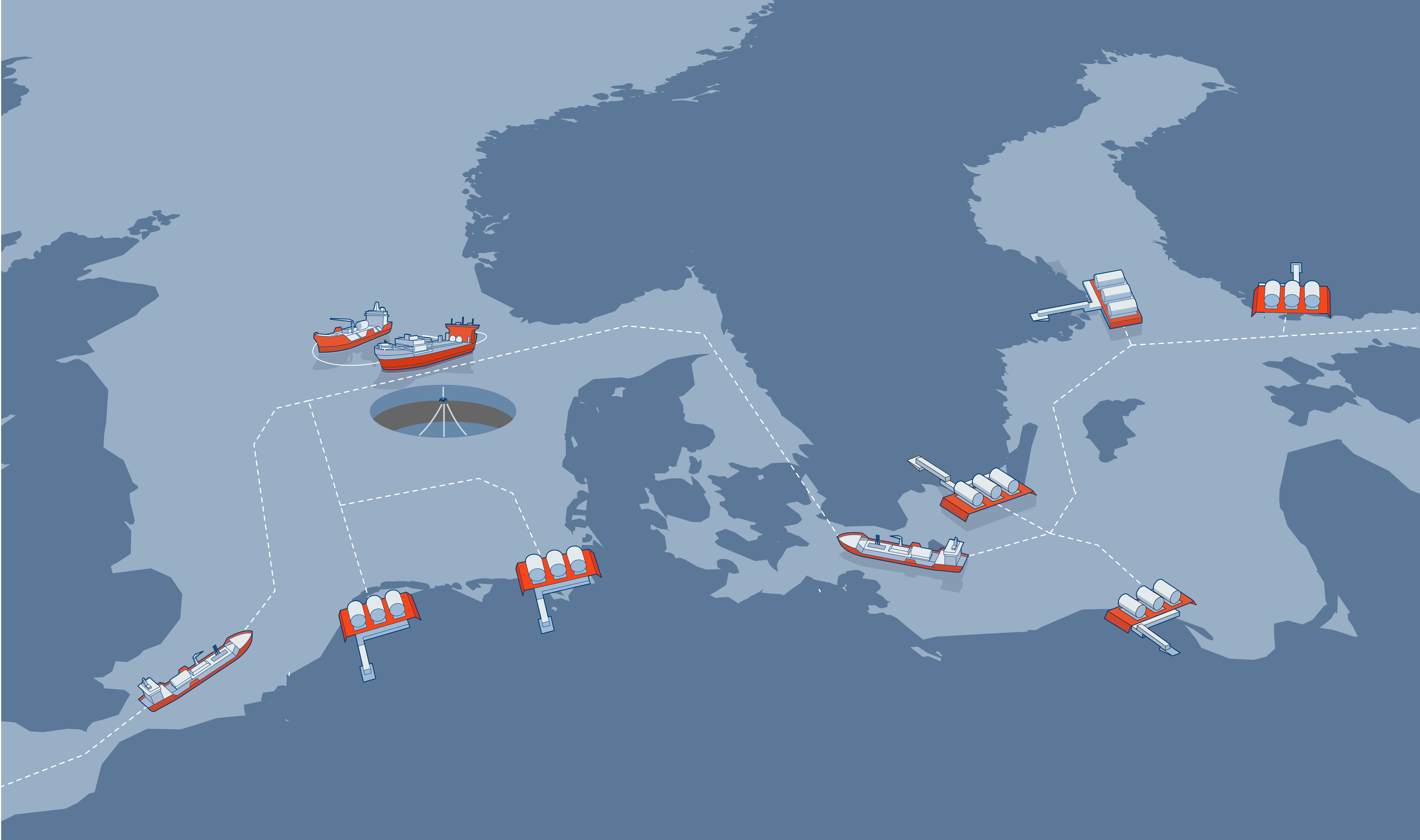
Harbour Energy has selected SLB as strategic reservoir partner for the concept and FEED phases of the large-scale carbon storage development in the Norwegian North Sea.
SLB has been selected to provide subsurface, well and subsea engineering services for Harbour Energy’s Havstjerne carbon storage project in the Norwegian North Sea.
The company will coordinate an integrated scope connecting storage reservoir analysis with injection-well design, subsea infrastructure and plans for monitoring the injected CO₂. The work will support the concept and front-end engineering and design phases as the partners develop the project’s technical, cost and schedule basis ahead of a final investment decision.
SLB will undertake early engineering studies, reservoir maturation and well-related work. Its OneSubsea joint venture will develop the concept and FEED for the subsea injection system, comprising a template manifold, all-electric trees, controls, an umbilical and a distribution system.
“Carbon storage projects are moving from individual technical studies toward integrated development models that connect the subsurface, wells and offshore infrastructure,” said Gavin Rennick, president of SLB’s New Energy and Industrial business.
Havstjerne is operated by Harbour Energy in partnership with Stella Maris CCS, a Yinson Production company. It is being developed to provide offshore storage capacity for industrial CO₂ emitters across Europe.
Well 9/6-1, drilled in 2025, confirmed geological properties suitable for CO₂ injection and storage. According to the Norwegian Offshore Directorate, the well encountered 97 m of good-quality sandstone reservoir in the Middle Jurassic Sandnes Formation and 52 m of moderate-quality sandstone in the Bryne Formation.
The overlying sealing succession included 115 m of homogeneous shale in the Tau Formation and 58 m of sealing shale and dense siltstone in the Egersund Formation. Formation-pressure data indicated that the Sandnes and Bryne formations lie within the regional hydrostatic pressure gradient, while preliminary results from an injection test were positive.
The project received €225 million from the EU Innovation Fund in 2025 and has selected a low-pressure floating storage and injection concept designed to provide system reliability, lower costs and commercial flexibility.

