
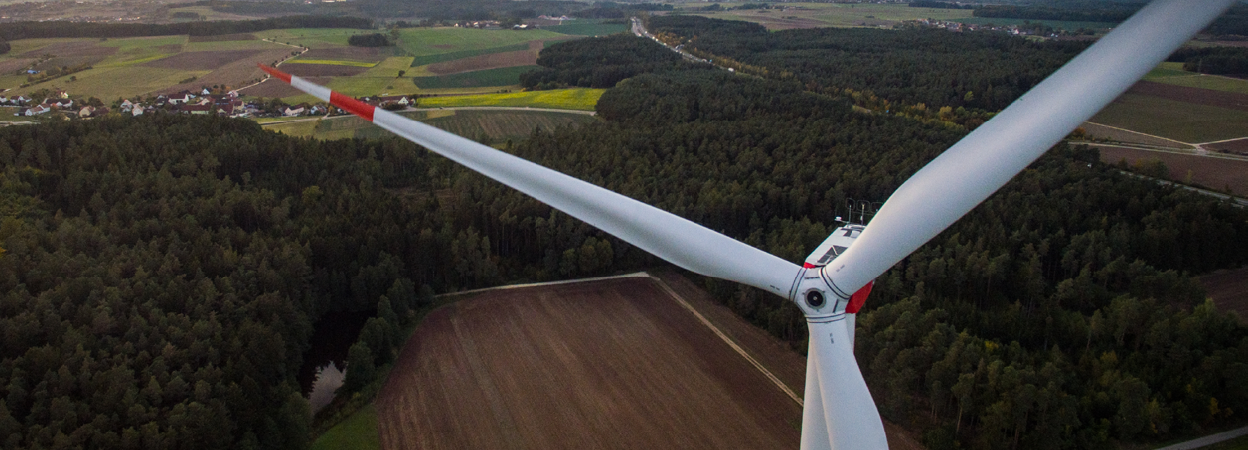
The deal will drive forward joint offshore wind projects between European countries, including Germany, Norway, France and Denmark.
The deal will drive forward joint offshore wind projects between European countries, including Germany, Norway, France and Denmark.
North Sea countries have agreed to deliver 100 GW of offshore wind power through joint clean-energy projects. These will include new ‘offshore wind hybrid assets’ — wind farms at sea that are directly connected to more than one country through interconnectors.
UK Energy secretary, Ed Miliband, said: ‘We are standing up for our national interest by driving for clean energy, which can get the UK off the fossil fuel rollercoaster and give us energy sovereignty and abundance.’
It is hoped that the declaration will lead to the building of more interconnectors, enabling countries in the North Sea to send clean power to where it’s needed most.
The UK signed a statement of intent with Germany, Belgium, Denmark, the Netherlands to unlock cross-border offshore electricity projects, focusing on joint planning, cost-sharing and market arrangements to speed up delivery.
The UK also agreed a framework to deepen German and UK collaboration on offshore hybrid assets, advanced subsea energy infrastructure that combine offshore wind farm connections with electricity interconnectors.
Ben Wilson, president of National Grid Ventures, said: ‘Today is a step towards a more integrated energy system in the North Sea. LionLink and projects like those being announced today are important for maximising the efficient use of resources, reducing costs, and minimising the impact on coastal communities.’
Meanwhile, Britain has announced record levels of solar and onshore wind projects as well as tidal energy schemes in its latest renewables auction.
‘Combined with January’s offshore wind auction [which secured 8.4 GW of offshore wind], the government has now delivered a record 201 projects, generating 14.7 GW of new clean power – enough to supply the equivalent of 16 million homes,’ said the UK government in a statement.
This puts the UK on track for its 2030 clean power target. New onshore wind has been agreed at a price of £72.24/MWh and new solar at £65.23/MWh, both under half the £147/MWh cost of building and operating new gas power stations.
The projects, which are expected to unlock £5 billion in private sector investment, include: Imerys Wind Farm in Cornwall – the largest onshore wind project to be successful in England in a decade; Sanquhar II Wind Farm in Dumfries and Galloway in Scotland – the fourth largest onshore wind farm in the UK; and the West Burton solar farm – the largest solar farm ever to win a government renewables contract.
Miliband said: ‘These results shows once again that clean British power is the right choice for our country, agreeing a price for new onshore wind and solar that is over 50% cheaper than the cost of building and operating new gas.’

