
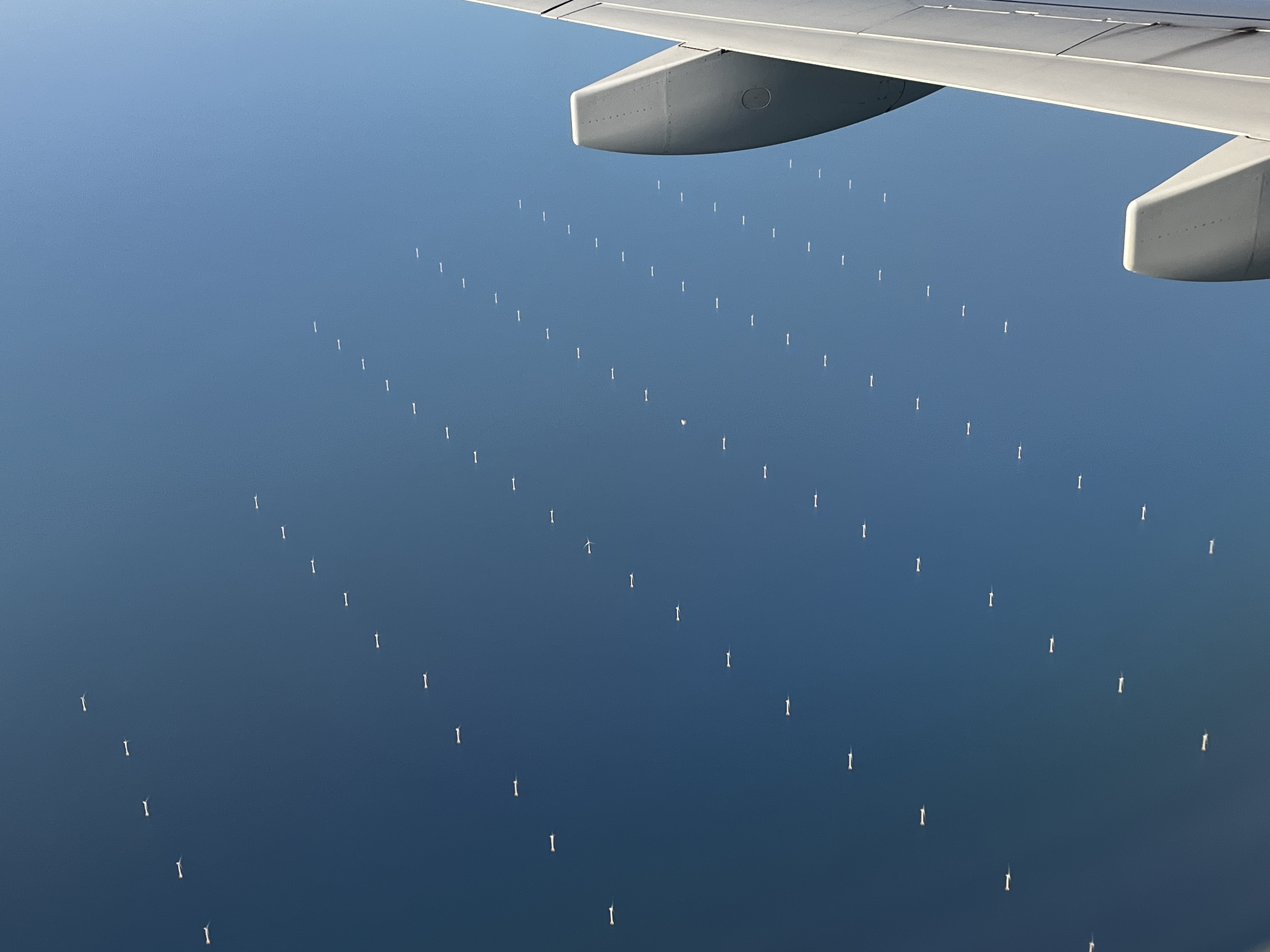
A new economic impact analysis by Menon Economics in cooperation with TGS | 4C Offshore estimates that the construction and operation of offshore wind farms supported approximately 180,000 full-time equivalent (FTE) jobs and generated around EUR 26 billion in gross value added across Europe in 2025.
According to the study, the economic benefits of offshore wind extend well beyond project developers and operators, reaching deep into an increasingly integrated European supply chain. The analysis aims to provide developers, suppliers, investors and policymakers with greater insight into where offshore wind activity generates economic value and how project activity in one market can create opportunities throughout Europe.
The report finds that around 55,000 FTEs were directly supported by offshore wind projects through activities such as turbine manufacturing, foundation fabrication, cable production, engineering services, installation and offshore construction. A further 125,000 jobs were supported indirectly through the wider supply chain, meaning that each direct offshore wind job supports approximately two additional jobs upstream.
Most employment is associated with the development and construction of new offshore wind projects, accounting for roughly 155,000 FTEs. Operations and maintenance activities support an estimated 25,000 FTEs.
In terms of economic value, the study estimates that construction activities generated around EUR 16 billion in gross value added, while operational activities contributed approximately EUR 10 billion. Although operations account for a smaller share of employment, they represent a significant and growing source of long-term value creation. Around EUR 7 billion of the operational value is linked to electricity generation itself, with a further EUR 3 billion attributed to operation and maintenance services.
The analysis highlights the broad geographical distribution of benefits across Europe. Germany, the United Kingdom, Denmark, Spain and the Netherlands capture some of the largest shares of value creation due to their established offshore wind industries, manufacturing capabilities and maritime supply chains. Significant economic impacts are also recorded in Norway, France, Poland and Belgium through activities including vessel operations, installation services, manufacturing and technical consultancy.
Germany, the United Kingdom, Denmark, Spain and the Netherlands capture some of the largest shares of value creation
The study was conducted using Menon Economics’ multi-regional input-output (MRIO) model, calibrated with project-level supplier and expenditure data from TGS | 4C Offshore. The methodology enables employment and value creation to be quantified across industries and countries throughout the European offshore wind supply chain.

