
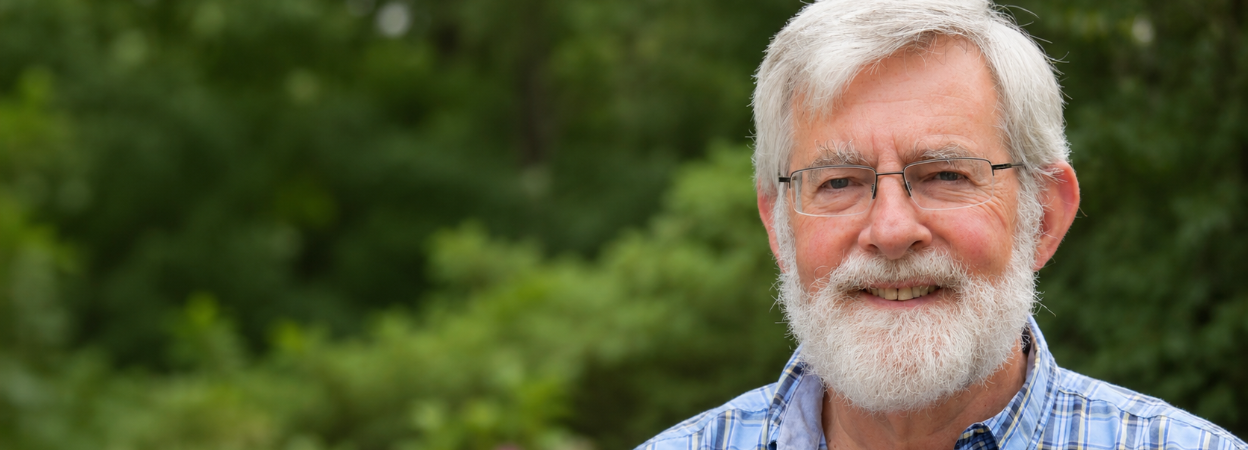
It is with great pleasure that I bring this interview with Anton Ziolkowski, who has been one of the most distinguished figures in exploration geophysics and whose career has spanned more than five decades of research, teaching, innovation and engagement with industry. His technical contributions can be seen spread over seismic-source characterization, seismic processing and interpretation, controlled-source electromagnetic methods, and the development of geophysical technologies for hydrocarbon exploration and production.
Throughout his professional journey, Anton’s desire has been to connect the fundamental physics of geophysical measurements with practical applications. His work on seismic sources, particularly air-gun arrays, seismic wavelets, deconvolution, Vibroseis, multicomponent seismic data, and sub-basalt imaging is noteworthy. This body of work got extended to controlled-source electromagnetics when he co-founded MTEM Ltd. in 2004, to develop electromagnetic methods for detecting hydrocarbons from surface measurements. Later, this company was acquired by PGS, and Anton served as Chief Scientist of PGS Geoscience and Engineering. He returned to the University of Edinburgh in 2010 and has continued his research into MTEM and its applications, including geothermal exploration.
His numerous contributions, many of which are mentioned above, have earned him numerous honours, which include the EAGE Conrad Schlumberger Award (1982), the Desiderius Erasmus Award (2016), the The Loránd Eötvös Award (2023), the SEG Distinguished Lecturer and Honorary Membership recognition, the Fellowship of the Royal Society of Edinburgh, membership of Academia Europaea and Fellowship of the Royal Academy of Engineering. His influence as a dedicated educator and mentor is equally profound, with many of his former students now holding prominent roles in academia and industry. Throughout his career, Anton has contributed to the EAGE society, until recently serving as Chair of the Honors and Awards Committee.
In this interview, we explore Anton’s fascinating career, from his significant contributions to seismic and electromagnetic methods, his remarkable expertise in translating scientific research ideas into commercial applications, to his thoughts on the future of the discipline. Additionally, we explore his legacy as an educator and mentor, and the lessons that he has learned over a career that spans over fifty years. Following are excerpts from the interview.
Satinder Chopra
Anton, you have had a long and a remarkable career, wherein you have made original and fundamental contributions to applied geophysics. Let us start at the beginning. What attracted you to geophysics, and what were some of your experiences in education that set the stage for your career.
Looking back over my career, it is clear that I had amazing luck and critical help every inch of the way. There were really three defining experiences that attracted me to geophysics. First, in 1965, before I went to university (Cambridge) to study engineering, I had a six-month job with Seismograph Service Limited (SSL), which included eight weeks on vessels in the North Sea collecting marine seismic data for oil companies. The 24-channel data were recorded analogue on large magnetisable sheets, that were wound on a drum, one sheet per shot record. My main job was on the shooting vessel of a two-vessel operation, detonating 8kg of dynamite once per minute just below the sea surface and towed about 50 m behind the vessel.
Second, after I had completed two years’ study of engineering and taken Part I Mechanical Sciences Tripos exam, I bought a second-hand book by Willard Bascom, entitled “A hole in the bottom of the sea.” It described the difference between oceans and continents, and explained isostasy and the Mohorovičić discontinuity, all of which I found really interesting. As a result, I decided to change my course of study and take a new Natural Sciences course, named Earth Science.
Third, the eight geophysics lectures in the course were given by Professor Sir Edward Bullard and they were wonderful. I was hooked. Later, before Christmas 1967, I asked to see Sir Edward and said I would like to do a Ph.D. in Geophysics. He said I should take Part II Physics, which I did. I started my Ph.D. in 1968.
Looking across your work, from seismic sources and wavelets to electromagnetic methods, there seems to be a recurring emphasis on going back to the underlying physics and questioning assumptions that others may have taken for granted. Is that a fair description of your approach to geophysics? How has that way of thinking guided the problems you chose to work on?
The question sounds as if I had a plan. There has never really been a plan. Each step along the way has been an effort to understand things which I found difficult, but which the rest of the community seemed to understand and take for granted. For example, when I was trying to understand air gun bubble oscillations in 1969, Peacock and Treitel published their paper “Predictive deconvolution: theory and practice,” which was rapidly adopted throughout the industry. It took me years to understand the paper. When I finally understood it, I had to conclude that there was no need to understand sources if the seismic reflection response of the earth is white and the source is minimum-phase. Multiples make the reflection response non-white, but that is exactly the problem that predictive deconvolution solves. Despite the industry acceptance of the method, I remained suspicious of both the whiteness assumption and the minimum-phase assumption.
Your early work was focused on seismic sources and the determination of signature of air guns. How did you get interested in them and why did you think that they need the necessary attention that you gave them?
In 1968 I was given “the air gun project” as the topic for my Ph.D. research. The Geophysics Department had research ship time for projects in the Bay of Biscay and the Atlantic Ocean over Rockall Bank. I was expected to obtain data with a 30 cubic inch automatically-fired (not electrically-triggered) air gun, which had been made in the Department workshop. A previous Ph.D. student had towed the air gun and hydrophone receiver just below the sea surface. He obtained data but had very little acoustic penetration into the sediments. I realised I had to understand the air gun bubble oscillations. I was advised to talk to Brooke Benjamin in the Department of Applied Mathematics and Theoretical Physics (DAMTP), who introduced me to a new book on Physical Acoustics containing a chapter with 170 references. He told me, “I think you will find what you need in there.” I did. It was a numerical model, developed by F. R. Gilmore of Caltech. I used this to write a computer program that could compute the oscillations of an air bubble and its outgoing pressure signal. I found that the reflected energy of the 30-cu. in. air gun would be maximised if I towed it and the receiver at 15 m depth. At these depths we were able to obtain good data in very bad weather and discovered a sedimentary basin on Rockall Plateau that we reported to Nature (Roberts et al., 1970).
One important milestone that is conspicuous in your career is the Delft experiment of 1983 which demonstrated the practical value of source signatures. What were your learnings from it about the relationship between the theoretical advances and the real-world seismic data acquisition?
The really special thing about the Delft Air Gun Experiment was that the system to make the necessary measurements was already in place on the two Seismic Profilers vessels: the “Liv Profiler” and the “Nina Profiler.” Tor Haugland, with great prescience, had equipped these vessels with a near-field hydrophone 1 m from the gun ports of every gun in each subarray. I met Tor in 1980 at the SEG Annual Meeting in Houston. He told me about his vessels and invited me to do an experiment. In 1981 Tor and I were joined by Gregg Parkes and Les Hatton from Merlin Geophysical and we made simultaneous near-field and far-field measurements. When we saw the near-field hydrophone data, it was obvious what was going on. We filed a patent application that year and published the “notional source method” and first results in “Geophysics” in 1982. In 1984 we published a second “Geophysics” paper explaining the algorithm and showing better results. The Delft Air Gun experiment essentially confirmed what we had already learned from our previous work.
Determination of the far-field signature of interacting air-gun arrays was an interesting method developed by you and your colleagues. How did this method evolve from a research idea to into a widely adopted technique in the seismic industry?
It took a long time. Schlumberger became the owner of the invention and, under the direction of Leon Walker, designed a system to implement the method. It worked. These new measurements came at a price and very few oil companies were willing to pay extra for them. As data quality improved, companies began to recognise that existing processing methods were not adequate, and they used air-gun modelling software to improve estimates of the source signature. Ten years after our patent expired and thirty years after we invented the method, they gradually began to recognise the need to determine the far-field signature of air gun arrays from near-field measurements.
You have been a strong proponent for the measurement of seismic source signatures, and your 1991 paper on ‘Why don’t we measure seismic signatures?’ led to a considerable discussion in the industry. Why do you think it generated such a strong response?
When I wrote that paper, I expected a strong reaction, because I was questioning the assumptions in the statistical deconvolution method, which was pioneered by Enders Robinson in his 1954 MIT Ph.D. thesis, and which had been used in the industry for almost forty years. I am very grateful to Don Steeples, the Editor of Geophysics, for publishing it, knowing full well that it was controversial. Professor Jerry Mendel wrote in his first comment on my paper that I had made many statements aimed at denouncing statistical-based deconvolution methods in favour of my own deterministic-based methods. He explained that my definitions of whiteness and randomness were wrong. I should have been clearer. The statistical method is a truly scientific theory in Karl Popper’s sense, because it is formulated in such a way that it can be put at risk of refutation. It estimates the source signature. If you actually measure the source signature, you can find out if the estimated signature is right. If the estimated signature does not match the measurement, there is a problem with the estimate and the method that produced it.
Given the extensive body of work that you have done on wavelets, deconvolution and well-ties, tell us about the importance of the source signature for obtaining a reliable seismic wavelet and eventually a good well-tie with the seismic data.
Thank you. I have been working on this recently with Guido Baeten (Shell). The sonic velocity and density measurements at the well are the ground truth and place severe constraints on parameters of the earth model. Suppose we have significant structure at the well position and are using full waveform inversion (FWI) to obtain the earth model. We need to use the actual source signature to match the modelled data to the measured data. Any attenuation of high frequency energy is in the Green’s function. If we want to tie the stacked seismic data to the well, we should recognise that at each common mid-point position, the source and receiver are coincident, and reflections occur at normal incidence. To obtain a good well tie, we should therefore compute the response of the three-dimensional earth model for a receiver very close to the source at the well position, constraining the earth model with the well data and using the measured source signature. The result of this computation is the total field at the receiver, which is equal to the incident field (the direct wave) plus the scattered field. The stacked seismic data are only the scattered field. We need to subtract the incident field from the total field to obtain the tie. Right at the source, the incident field is the source time function.
Another related area of your work is on impulsive and vibratory sources. What are some of the important considerations that need to be understood about Vibroseis data that are not obvious from the conventional processing workflows?
It has been a long time since I had any direct experience of Vibroseis acquisition and processing, and I may be completely out of date. Guido Baeten, my first Ph.D. student, and I published a book on the Vibroseis source in 1990 (Baeten and Ziolkowski, 1990). In the 1980s, phase control of the land vibrator changed from using only the baseplate accelerometer to a weighted sum of the baseplate and reaction mass accelerations. This weighted sum is equal to the force of the baseplate on the ground. Phase control attempts to keep this ground force signal in phase with the predetermined pilot sweep. The autocorrelation of the pilot sweep is the target wavelet we want to have in the data. The received data are cross-correlated with the pilot sweep. It turns out that this does not yield the desired wavelet in the data. The reason is that the far field displacement is in phase with the ground force, but the geophones measure velocity, not displacement. So, after cross-correlation with the sweep, the wavelet is the time derivative of the desired autocorrelation function. Probably everyone knows this by now.
You have also demonstrated the importance of low-frequency seismic acquisition for sub-basalt imaging. What were some of your learnings from such studies about the importance of low frequencies, how did they remain elusive in the imaging of difficult environments?
The problem is the sea-surface reflection, or “ghost.” It occurs at the source and at the receiver. If you think of the source as a monopole at depth D with positive amplitude, its sea surface reflection appears to come from a virtual source at height D above the surface with negative amplitude. At low frequencies the source and virtual source act as a dipole and differentiate the downgoing signal, thus enhancing the higher frequency energy and attenuating the lower frequencies. To enhance the low frequencies, you need to put both the source and receiver deeper. The bubble oscillation period of an air gun decreases with increasing gun depth, making the source higher frequency, so there is a well-known trade-off between bubble period and ghost enhancement of low frequencies. Maximum downgoing energy is achieved when the gun depth is equal to a quarter of the wavelength of the bubble oscillation frequency. This is what I did to obtain data over Rockall Plateau.
Some of the other areas of seismic data acquisition that you have worked on include the converted waves, 4C data, and VSPs. Compared with the all-pervasive use of the conventional P-wave seismic, how do you see the multicomponent and non-conventional seismic data evolving?
When I came to Edinburgh, Stuart Crampin and Xiang-Yang Li introduced me to shear waves and anisotropy. P-to-S converted waves can help determine the internal structure of rock formations, especially fracture directions. Exploration seismologists have a great deal of experience with P-waves, in which the angle of incidence and angle of reflection are equal, so it is easy to know where the reflection occurs. CMP stacking works and enhances the signal-to-noise ratio of the data. In converted-wave reflections, incident and reflected angles are unequal and depend on the VP/VS ratio, which varies with rock type and depth.
Therefore, it is not easy to know where the reflection occurs, and it is difficult to set up a workflow for routine data processing. In my very limited experience, converted wave investigations invariably become research projects. We need to understand the internal structure of the rocks, and it is not difficult to measure three-component data. The analysis, however, is difficult.
Another milestone in your career has been your work on the controlled-source electromagnetics (CSEM). What was your motivation behind the move from seismic into electromagnetic methods, and what were some of the similarities/distinctions between the two disciplines?
Keeva Vozoff and Kurt Strack introduced me to electromagnetics. They worked on me. Resistivities of porous rocks can vary enormously – from 1000 ohm-m for a sandstone saturated with hydrocarbons to less than 1 ohm-m for the same rock saturated with water. Water is ionised and hydrocarbons are not. Thus, electromagnetics is very helpful in discriminating between different fluids in the rocks. High frequencies are attenuated in conducting rocks and the propagation is diffusion, not wave propagation. For a seismologist, the data are terrible. But there are advantages. In CSEM you can inject a pseudo-random binary sequence source current time function, which has a flat amplitude spectrum over whatever bandwidth you desire, and you can measure it very precisely. There is no limit to the lowest frequency you can generate, unlike seismics, in which low frequencies are very hard to generate. In 2019 Evert Slob, a former student in Delft, and I published a book on the topic (Ziolkowski and Slob, 2019).
Together with Bruce Hobbs and David Wright, you developed the multi-transient electromagnetic (MTEM) method, which led to establishing MTEM Ltd. What convinced you at the time about the practical value of the method that you went ahead with the creation of a company?
Prior to David Wright joining us as a Ph.D. student, Bruce and I had worked together on a big European Commission-funded CSEM project with Deutsch Montan Technologie (DMT) in Germany, Compagnie Générale de Géophysique (CGG) in France, and the University of Cologne, Germany. Kurt Strack and I wrote the proposal, which was funded just as I was moving from Delft to Edinburgh. We performed a time-lapse survey over a gas storage site near Paris. After years of work with our colleagues, Horst Rüter, Andreas Hördt, Kurt Strack and Pierre Andrieux, we could not make sense of the data we had collected. When David joined us, Bruce and I suggested he work on the data we had all failed to understand. The recorded data were step responses, which we stacked to improve the signal-to-noise ratio. We decided to differentiate them to obtain impulse responses and then discovered there were timing errors that caused them not to stack up. When we corrected for the timing errors, we could see the gas in the reservoir and see the change in response from one survey to the other. We published our results in Wright et al. (2002).
MTEM soon evolved into a company employing about 70 people, before being acquired by PGS in 2007. How was this experience of taking a geophysical research idea into the commercial world, and what should the academic researchers know about before attempting to commercialize their research?
As you know, it is difficult to draw general conclusions from one example. We know we were extremely lucky with our success, but we had excellent advice from Bill Bryan and Campbell Murray of Scottish Enterprise. Prior to our 2002 Leading Edge publication, we had filed a patent application on our MTEM method. With help from Bill Bryan, we obtained Scottish Enterprise funding for a Proof-of-Concept project to design, build and test it. It worked. Bill and Campbell told us we needed to engage lawyers, sort out our relationship with the University, engage corporate financial advisers and “Don’t screw up.” We developed a business plan that required £10 million investment capital to take us to positive cash flow. We realised investors would not risk so much money to us inexperienced academics and we persuaded Leon Walker to leave Schlumberger and be our CEO, which he did. He worked with us for no salary for a year. In November 2004 we finally secured £7.4 million investment.
As a complement to seismic data, how significant do you think MTEM can be for direct hydrocarbon detection and reservoir monitoring, which is what it was initially developed for.
It is hard to say. No company currently offers MTEM as a service. We have had successes and failures. Interpretation of diffusive CSEM data is much more difficult than interpretation of seismic reflection data. In the two decades since we started MTEM, however, there have been vast improvements in instrumentation and computer power and in 3D electromagnetic modelling and inversion. It could be easier to make progress with the method now. I am working on electromagnetic methods with Paul Stoffa, Bruce Hobbs, Evert Slob and my students. We see an obvious application of MTEM to de-risk drilling for deep geothermal water, in which we are looking for a conductor, instead of a resistor. Monitoring carbon dioxide (CO2) sequestration is another application. Super-critical CO2 is not ionised and has lower density than water, so it is a resistor sitting above a conductor and should be easy to monitor, especially with a permanent system.
In recent years, we have seen your research returning to seismic source signatures, but now involving explosive sources, with the use of two unequal shots fired in the same hole. How was this return and what are the benefits of this approach?
At the National Coal Board, 1976-1980, I had four years of experience of land seismic data acquisition and processing in England, Scotland and Wales and learned from Bill Lerwill of SSL how to obtain good data. There are two problems with explosive source signatures: first, the ground conditions vary from shot to shot and, second, you cannot measure the source signature uncontaminated by scattering. Ever since those days, I had wanted to find a way to determine the source signature. A few years ago, Guido Baeten of Shell sent me some data from an explosives experiment conducted in Texas in which there were two charges of different size in each shot hole. If I could model the source signature of one shot in a given shot hole and deconvolve the seismogram, I would recover the Green’s function. Applying the same technique to the second shot in the same hole should recover the same Green’s function. Of course, the recovered Green’s functions would not be identical, but minimising the difference by changing the source parameters was a way to determine the two signatures. Our work was published in Ziolkowski (2022).
Yet another interesting research idea that you have pursued is about Bayesian inversion of seismograms from underground nuclear explosions. How did you get interested in this problem, what are some of the learnings that could be transferable to the oil and gas exploration?
After my Ph.D., my first job was at the Seismic Discrimination Group of Lincoln Laboratory at MIT, where I joined a wonderful group of seismologists and engineers, whose mission was to discriminate between earthquakes and underground nuclear explosions using seismic waves. I learned about seismology, underground nuclear tests, models of explosive sources and time series analysis. I met many of the people working in this field and have kept in touch with them and with underground nuclear testing. The last five of the six North Korean nuclear tests were located within a kilometre of each other - essentially in the same place. I applied the method I developed for explosive shots in the same hole to estimate the source time functions of these tests from seismograms recorded at the Mudanjiang seismic station in China (Ziolkowski, 2024). The Green’s function from the North Korean test site to any other seismic station was then obtainable by deconvolving the seismogram for the corresponding source time function. Guido Baeten and I showed that the method could be applied to explosive source seismic reflection data in Nigeria with two unequal shots in the same hole. The cost of the method is the cost of the additional charge in the same hole. We showed that the recovered source time functions and the signature determined by statistical deconvolution were different. The Green’s functions for the two shots obtained with our method were much more similar than those obtained with the statistical method. This work was published in Ziolkowski and Baeten (2025).
You have had an interesting career, which has taken you from MIT to the National Coal Board, the British National Oil Corporation, Delft, MTEM, PGS, and the University of Edinburgh. How do you look back at these stages, and which has influenced you more as a geophysicist?
In every place I was stimulated by the people I worked with and the problems we wrestled with. I have made life-long friendships. That aspect of my experience is far from unique. When I talk to friends and colleagues and new people I meet at geophysical meetings, my impression is we all feel the same way.
You have taught at Delft and Edinburgh for many years and supervised M.Sc. and Ph.D. students, many of whom went on to prominent careers in academia and industry. What do you think makes a good geophysicist, and what words of advice would you give young researchers entering the geosciences?
Geophysics is the application of physics (and mathematics and statistics and geology and petrophysics and engineering) to understand the Earth. Everything we use comes from the Earth, so it is important and interesting for many people. There is so much we don’t know: the scope for research is immense. Travelling and meeting interesting people is a normal part of the geophysical experience. If you like that, you can have a wonderful life.
You have contributed to the geophysical community through EAGE, most recently as Chair of its Honors and Awards Committee. What role has EAGE played in your own professional life, and how important do you think professional societies are in maintaining a scientific community and bringing together academia and industry? What would you say to colleague geoscientists about becoming involved with professional societies?
The professional societies may be the lifeblood of geophysics. They enable geophysicists to meet each other, share knowledge and discuss problems. In exploration geophysics, the focus is always on resources, and we use whatever we need to make progress. The theory for our signal processing was developed by electrical engineers. We apply drones to speed up and improve the quality of magnetic surveying. We use whatever mathematics is helpful. Our professional societies are the enablers in all this. Whenever I go to a meeting of EAGE or SEG, or other societies, I meet new people as well as old friends and invariably learn new things.
Finally, after such a long and illustrious career, what do you find most fascinating about geophysics today? In your opinion, are there specific problems or emerging technologies that could fundamentally change the way we explore the subsurface over the next foreseeable future?
I am not very good at anticipating technical developments and am often surprised by new technology. Human ingenuity seems to be inexhaustible. In geophysics we use whatever comes to hand. One of the biggest problems we face today is the transition away from dependence on fossil fuels. We are making progress with wind and solar energy. What else can we do? Engineers have tried to harness marine tidal effects: it’s difficult. What about tidal strain in the earth, which is about 10-8? Can this continuous inexhaustible mechanical effect be converted to electricity using piezoelectric material and stored in batteries? This is called energy harvesting. I don’t know how far along it is. If it works, could it be applied everywhere? What are the limiting factors? What new materials are needed? Geophysicists can help.
References
Baeten, G. and Ziolkowski, A. [1990]. The Vibroseis source, Elsevier. ISBN : 0444888799
Roberts, D. G., Bishop, D. G., Laughton, A. S., Ziolkowski, A. M., Scrutton, R.A., and Matthews, D. H. [1970]. New sedimentary basin on Rockall Plateau, Nature, 225(5228), 170-172. https://doi.org/10.1038/225170b0
Wright, D., A. Ziolkowski, A., and Hobbs, B. [2002], The Leading Edge, 21(9), 852-864. https://doi.org/10.1190/1.1508954
Ziolkowski, A. and Slob, E. [2019]. Introduction to controlled-source electromagnetic methods– detecting subsurface fluids: Cambridge University Press. https://doi.org/10.1017/9781107415904
Ziolkowski, A. [2022] Explosive source signature determination: Two unequal shots in the same hole, Geophysical Prospecting, 70(9), 1475-1486. https://doi.org/10.1111/1365-2478.13251
Ziolkowski, A., [2024], Bayesian inversion of MDJ seismograms for source parameters and yields of DPRK underground nuclear explosions 2 to 6: Pure Appl. Geophys, https://doi.org/10.1007/s00024-024-03454-8
Ziolkowski, A., and Baeten, G. [2025] Two unequal shots in the same hole: Statistical versus deterministic deconvolution: Geophysics, 90(1), V13–V27. https://doi.org/10.1190/geo2023-0761.1

