
Jørgen Rasmussen, Kim Gunn Maver and Gino Thielens present a conceptual framework of five geothermal technology stages and propose that Enclosed Loop Geothermal Systems have the attributes to become the dominant geothermal design.
Introduction
Renewables are now driving most new electricity growth: wind and solar are set to reach nearly 20% of global generation in 2026, up from 4% a decade ago (IEA, 2026), and total renewables are projected to climb from 32% in 2024 to 43% by 2030. Fossil fuels still dominate total output, but their share of new growth is shrinking (IEA, 2025; IEA, 2026).

Geothermal remains small, about 1% of the total global energy mix today (IEA, 2024). However, market attention is moving toward technologies that can provide reliable, dispatchable low-carbon energy. Geothermal is well positioned in this context because it can deliver baseload power and heat, unlike intermittent renewable sources (Rystad Energy and ThinkGeoEnergy, 2026). Innovation and startup activity in the geothermal sector is also increasing. At the same time, deployment remains uneven and highly dependent on project-specific conditions across different markets. It is also claimed that the development differs fundamentally from other renewable technologies. Geothermal projects are site-specific, capital-intensive, and reliant on subsurface conditions, resulting in longer lead-in times and higher upfront risk (Rystad Energy, 2026). Geothermal deployment has historically been limited by one fundamental constraint: dependence on favourable geological conditions (IEA, 2024).
The geothermal trajectory is changing. By 2050, geothermal could provide 8% of global final heat consumption and 9% of global electricity generation, driven largely by next-generation closed-loop and enhanced systems that borrow oil & gas drilling expertise. Geothermal’s advantage of firm, round-the-clock output plus direct heating and cooling use makes it a natural complement to an increasingly intermittent, solar- and wind-heavy grid (IEA, 2024; Energy Transitions Commission, 2026).
Over the past century, geothermal technologies have evolved through successive generations, each reducing reliance on naturally occurring reservoirs and increasing the degree of engineering control over heat extraction. This evolution has progressed from exploiting natural hydrothermal resources to developing advanced engineered systems capable of accessing geothermal energy in a wider range of geological settings, overcoming the fundamental constraint of favourable geological conditions. However, no generational framework seems to have been developed for geothermal solutions that can describe the geothermal evaluation.
We are therefore proposing a new conceptual framework of five geothermal technology stages, comprising a Natural System stage (Generations 1 and 2) that branches into two engineered tracks: an Open Systems track (Generation 3) and a Closed Systems track (Generations 3, 4 and 5). We propose that the emergence of Enclosed Loop Geothermal Systems represents the latest step in the Closed Systems track, Generation 5, and that it has the attributes to become the dominant geothermal design. By completely isolating the subsurface heat-exchange system from the surrounding formation, these technologies aim to deliver geothermal energy with higher predictability, scalability, and environmental security moving, geothermal from a geological problem to an engineered solution similar to the evolution in other industries.
Geothermal generations
The following is a review of the development of solutions driving the increasing use of geothermal energy in the context of this generational framework, and how it is proposed that Generation 5 of the Closed Systems track has the potential to become the dominant geothermal design and make ‘geothermal everywhere’ possible.
Applications of geothermal energy for district heating goes back to the 14th century (Geothermal DHC, 2021), but it was the 1970s oil crisis that triggered geothermal’s first major growth spurt, with half of all US geothermal capacity built in the decade that followed the 1973 oil shock (Thomas, 2023).
Beyond the Natural Systems stage (Generations 1 and 2), geothermal technology development branches into two engineered tracks. The Open Systems track (Generation 3) retains an engineered flow path that can still exchange fluid with the surrounding formation. The Closed Systems track (Generations 3, 4 and 5) fully contains the working fluid within engineered conduits, with no such exchange; because it branches separately from the Natural Systems stage, its own numbering restarts at Generation 3. Within the Closed Systems track, Generation 3 covers single-well designs and Generation 4 covers multi-well, multilateral designs, before Generation 5 removes hydraulic interaction with the formation entirely.
| Natural solutions | |||
Generation 1 | Natural springs/water flow | No or very limited subsurface engineering required. | ||
Generation 2 | Conventional Hydrothermal | Natural reservoir, natural permeability, and usage of formation fluids. Most often using a doublet-well solution for reservoir management. | ||
| Closed solutions | Open solutions | ||
Generation 3 | Advanced Geothermal Systems (AGS) | Single-well closed-loop heat exchanger (co-axial or U-tube); heat transferred from the formation by conduction alone. | Enhanced Geothermal Systems (EGS) | Artificially created or stimulated reservoir permeability. |
Generation 4 | Closed-Loop Geothermal (CLGS), Advanced Closed Loop (ACL) | Multi-well, multilateral closed-loop architecture for greater heat-exchange area; some wellbore sections may remain in direct contact with the formation. |
|
|
Generation 5 | Enclosed Loop Geothermal (ELG) | Entire subsurface heat exchanging system enclosed within engineered piping for a single well; no hydraulic communication between the working fluid and the geological formation. |
|
|
Table 1. The classification framework for the evolution of geothermal technology.
Generation 1: Original use of geothermal
The first known geothermal district heating system dates to 1332 in Chaudes-Aigues, France, where wooden pipes distributed heat from the Par spring to local houses (Geothermal DHC, 2021). In 1818 Francesco de Larderel began extracting boron from Tuscany’s geothermal springs, and by 1827 he was using the steam itself as a heat source for that process (Dutch, 2021). The first geothermal district heating system in the US came in 1892, in Boise, Idaho, where geothermal water heated more than 200 buildings (Idaho Governor’s Office of Energy Resources, 2008).
Power generation began at the Larderello site: Piero Ginori Conti tested the first geothermal generator there in 1904, lighting five bulbs, and the first commercial geothermal power plant went into operation in 1913 (Dutch, 2021; Geothermal Stories, 2021).
These first real and limited applications of geothermal seem to have been either natural springs or a single hole/well in the ground and can be described as the infancy of geothermal due to the limited subsurface engineering requirements.
Generation 2: Conventional hydrothermal
The second generation of geothermal technology relies on naturally occurring hydrothermal reservoirs. These systems require a rare combination of geological conditions: a sufficiently hot subsurface resource, natural permeability within the rock formation, and the presence of water.
In these systems, wells are drilled into geothermal reservoirs and naturally occurring hot water is produced to the surface. These modern liquid-dominated hydrothermal projects (the vast majority of today’s district heating and cooling systems) normally have the standard minimum ‘doublet’ configuration: one production well and one injection well for reservoir management. A review of data from 152 geothermal fields worldwide documents that reinjection is necessary because: production continuously withdraws mass and pressure from the reservoir, and without returning fluid, pressure drawdown will eventually degrade well productivity and can cause surface subsidence (Kamila et al., 2021). Only 32 countries in the world have geothermal electricity plants in operation, with a combined capacity of 16,318 MW installed in 198 geothermal fields with 673 individual power units (Gutiérrez-Negrín, 2024).
Combining hydrothermal resources with heat pumps to lift temperature widens the usable geography because it removes the need for naturally hot (90°C+) water. Systems can now run on moderate or even low-temperature water that exists far more widely than the high-enthalpy resources conventional hydrothermal power needs.
The clearest evidence of this comes from Europe, where heat-pump-assisted geothermal district heating has scaled well beyond the handful of countries with volcanic or rift-zone geology. By the end of 2023, Europe had 346 geothermal district heating systems in operation, with a combined installed capacity of 6 GWth across 29 countries (Toth et al., 2025).
Long-established examples of conventional hydrothermal power and heat production include Larderello (Italy), the Geysers (California), and geothermal fields in Iceland and New Zealand. While Generation 2 systems have proven successful such as in Munich, Germany where no heat pumps are required or in Aarhus, Denmark, where heat pumps are required to deliver the required temperatures, their deployment is geographically limited (Cariaga, 2024; Lorenzen, 2025). Only parts of the Earth’s geothermal resources possess the natural combination of temperature, permeability, and fluid content required for economic development (U.S. Department of Energy, 2019), even when adding heat pumps to lift the temperature to the required level. In addition, operational risks may materialise, as conditions such as wellbore scaling, Electrical Submersible Pump (ESP) malfunctions, and casing corrosion caused by chemicals in formation water can arise (Mathiesen et al., 2021).
Generation 3 (Open Systems):
Enhanced Geothermal Systems (EGS)
Enhanced Geothermal Systems represent the commercial scale-up of natural systems. This Generation 3 technology of the Open Systems track emerged to address the scarcity of naturally permeable reservoirs, with Enhanced Geothermal Systems seeking to create artificial permeability within hot rock formations by stimulating the subsurface (Tester et al., 2006).
Instead of relying on naturally occurring porosity, permeability and fractures, engineers inject fluids under pressure to create or expand fracture networks that can circulate water through otherwise impermeable rock. The system is described as open because the created fractures can connect to existing faults and fractures in the rock, allowing fluid to leak out of the system. The concept significantly expands the accessible geothermal resource base because hot rock exists beneath the worlds landmass.
An Enhanced Geothermal System consists of either the classic vertical/deviated multi-well layouts developed at early pilot sites or the newer horizontal, multi-well layouts. For all configurations, well spacing is a key design variable: wells must be close enough to ensure fracture connectivity and adequate flow, but wide enough to delay thermal breakthrough.
Enhanced Geothermal Systems offers access to larger geothermal resources and potential deployment in many new regions. Fervo Energy’s project in Beaver County, Utah, is the leading new US example. It uses horizontal drilling techniques borrowed from the oil and gas industry to create the reservoirs (Fercho et al., 2024). However, besides the risks of conventional hydrothermal geothermal systems, it also introduces stimulation complexity, water management requirements, uncertainty regarding long-term reservoir performance, and possible reservoir degradation over time. In addition, reservoir stimulation can induce seismicity, which has been a significant problem associated with many projects (Zhou et al., 2024).
Generation 3 (Closed Systems):
Advanced Geothermal Systems (AGS)
Generation 3 of the Closed Systems track represents the engineered realisation of a closed system: the reliance on geology as a flow path for the working fluid is removed, with the working fluid within a closed loop and thereby limiting the risk of fluid losses associated with open systems. This generation represents the transition from reservoir engineering towards system engineering. These systems encompass emerging technologies designed to improve resource accessibility, drilling efficiency, thermal performance, and project economics (IEA, 2024) and are described in industry terminology as Advanced Geothermal Systems.
Rather than focusing solely on modifying the reservoir, these technologies seek to optimise the entire well system through improved thermal management strategies and the integration of drilling, completion, and surface systems into one optimised geothermal architecture. In closed geothermal systems, the fluid circulates within a contained subsurface circuit rather than flowing through the surrounding rock formation (van Liedekerke et al., 2026). This generation serves as the bridge between traditional reservoir-based geothermal development and the fully engineered geothermal systems of the future.
Closed system designs at this generation are single-well Deep Borehole Heat Exchangers (DBHE), typically built as co-axial or U-tube configurations. Heat is transferred from the formation through conduction into the working fluid through the wellbore structure (Kolo et al., 2024). The wells are vertical, often retrofits and have issues returning heated water to the surface without a significant heat loss.
This approach eliminates some of the challenges associated with reservoir management, including formation fluid production, reservoir depletion, fluid loss, scaling and fouling from produced brines, and water consumption. Closed systems also offer increased geographical flexibility, reduced environmental impact, simplified permitting, improved operational predictability, and lower dependence on natural permeability.
Generation 4 (Closed Systems):
Closed Loop Geothermal (CLGS) and Advanced Closed Loop (ACL)
Generation 4 of the Closed Systems track extends the single-well concept of Generation 3 to multi-well designs, seeking greater heat-exchange area through advanced directional drilling, multi-lateral and extended-reach well architectures, and novel heat extraction methods. These designs have been described through several terminologies, principally Closed Loop Geothermal and, for multilateral/interception-based variants, Advanced Closed Loop.
Execution of multi-lateral wells with interconnections does bring complexity and hence uncertainty on time and cost. Furthermore, many systems still rely on direct interaction between portions of the wellbore and the surrounding formation. While the working fluid is contained, sections of the heat-exchange pathway may remain exposed to geological conditions that can influence long-term performance and still make the solutions somewhat geology dependent.
A recent example of this design and associated issues is the Eavor’s Geretsried project in Bavaria, Germany, which uses four multilateral closed-loop wells where a working fluid circulates through a network of interconnected lateral boreholes drilled at ~4 km depth that are not cased (Eavor Technologies, 2025; Bundesverband Geothermie, 2026).
Generation 5 (Closed Systems):
Enclosed Loop Geothermal (ELG)
The proposed Generation 5 differs from Generations 3 and 4 of the Closed Systems track because the complete subsurface circulation system is enclosed inside a simple engineered pipe removing all hydraulic interaction with the geological formation during operation.
This single-well geothermal system, with possible lateral extension, uses a co-axial solution in which the working fluid and the complete subsurface heat-exchange flow path are contained within engineered conduits along the full length of the system. It has no hydraulic communication between the working fluid and the surrounding geological formation, with the formation serving only as a thermal source (Maver et al., 2026c). It is described as Enclosed Loop Geothermal (ELG). As with many Generation 3 closed systems, there is a use of a co-axial pipe configuration because they combine low hydraulic losses, high flow capacity, mechanical simplicity, compatibility with conventional oil and gas completions, and efficient thermal performance (Alimonti et al., 2018; Chen and Tomac, 2023).
For Generation 3 closed solutions modelling studies of the co-axial pipe concept have been conducted, indicating limited thermal energy output (Kolo et al., 2024; Brown et al., 2026). A few examples of enclosed-loop projects are available. A 2500m-deep co-axial borehole heat exchanger was drilled in the centre of Aachen, Germany. It reached 85°C at depth but ultimately was judged economically unviable in 2011 because of the cost of adequately insulating the inner pipe for the returning fluid (Dijkshoorn et al., 2013). The 2302m-deep Weggis (Switzerland) enclosed co-axial borehole heat exchanger reached a bottom-hole temperature of approximately 78°C. The vacuum-insulated inner pipe effectively reduced thermal short-circuiting and enabled long-term heat extraction. However, the thermal output of approximately 40-100 kW was insufficient to justify the drilling cost, demonstrating the technical feasibility but limited commercial viability of early deep borehole heat exchangers (Kohl et al., 2002; Chen and Tomac, 2023). In many publications, the conclusion is that drilling costs must decrease substantially for closed-loop geothermal systems to be economical as in Tangirala and Vilarrasa (2025).
Three developments are proposed to overcome these limitations and issues. To improve the well performance a long lateral section is added to the geothermal well to increase the heat uptake area and limiting the heat loss in the inner pipe returning the heated water through an insulated pipe (Maver, 2025). Well cost is also a key factor impacting the commercial viability of an enclosed-loop geothermal well solution. Average drilling speeds have been boosted through oil and gas technology innovations. Overall, oil and gas capabilities can significantly support geothermal growth, especially in drilling, subsurface assessment and project execution (Rystad Energy, 2026). With the engagement from policymakers and the oil and gas industry, it is estimated that costs for next-generation geothermal wells could decrease by up to 80% by 2035 (IEA, 2024).
The Enclosed Loop Geothermal represents the evolution of geothermal energy from resource-dependent systems toward completely standardised engineered infrastructure eliminating any geology dependency when in operation.
Applying industry nomenclature
The individual acronyms used (EGS, AGS, CLGS, ACL) are consistent with the International Association of Drilling Contractors (IADC) Geothermal Well Classification abbreviation definitions (IADC, 2025), and with IEA (2024) terminology, with the exception of ACL, which IEA does not define or use. Within the Closed Systems track, we assign AGS to Generation 3, reflecting its single-well architecture, and group CLGS with ACL into Generation 4, reflecting their shared multi-well, multi-lateral architecture, consistent with IADC’s framing of ACL as a multi-lateral/interception-based design variant within the broader closed-loop family rather than a distinct technology category. The generational framework itself is our own construct for a future classification.
Two elements are additions beyond both sources: Generation 1 (natural springs), which falls outside IADC’s scope since its classification applies only to drilled wells; and Generation 5 of the Closed Systems track, ELG, which is a new geothermal class proposed by us.
Applying IADC’s (2025) Reservoir Dependency classification to our scheme: Generations 1 and 2 (Natural Systems) correspond to reservoir-dependent resources (heat, permeability, and fluid naturally present), while the Open Systems and Closed Systems tracks correspond to reservoir-Independent resources (sufficient heat present, but permeability and/or fluid engineered or absent). Within the reservoir-independent group, a further distinction applies: Generation 3 of the Open Systems track (EGS) remains an open system, in which the engineered flow path can still exchange fluid with the surrounding formation, whereas Generations 3, 4 and 5 of the Closed Systems track are closed systems, in which the working fluid is contained within engineered conduits with no such exchange.
The dominant design of geothermal energy
History tells us that industries rarely scale around the most complex technology. Instead, industries converge on a dominant design that balances performance, reliability, manufacturability, scalability, and cost effectiveness, shifting from solving site-specific problems towards standardised, repeatable infrastructure that can be manufactured, financed and deployed at scale (Anderson and Tushman, 1990).
Wind energy evolved through many competing concepts before converging on the three-bladed horizontal-axis turbine. That design became dominant because it was simple, reliable, scalable, and economical (Garud and Karnøe, 2003).
Mobile phones followed a similar path. Flip phones, sliders, keyboards, and stylus devices eventually gave way to the touchscreen smartphone, a dominant design that enabled global scale and standardisation (Cecere et al., 2015).
Generation 5 Enclosed Loop Geothermal exhibits the same characteristics. It simplifies geothermal development by enclosing the entire heat-exchange system within engineered infrastructure and minimising dependence on reservoir behaviour (Table 2):
Simple | Reliable | Universally Deployable | Low Material Intensity |
Eliminates reservoir stimulation, production wells, injection wells, formation-water handling, and reinjection systems | Performance depends on engineered infrastructure rather than changing reservoir conditions | Can be implemented anywhere where a well can be drilled with sufficient subsurface temperature and thermal conductivity to make it commercial | Does not require critical raw materials such as lithium, cobalt, nickel, or rare earth elements; relies primarily on steel, cement, water, drilling technology, and industrial piping systems |
Table 2. Geothermal energy dominant design characteristics.
Commercially, this dominant design can reduce project risk, improve bankability, enable standardisation, accelerate deployment, expand the addressable market, and create infrastructure-like investment opportunities attractive to utilities and institutional investors.
The direction of the geothermal energy development journey
The evolution from the Natural Systems stage through the Open Systems and Closed Systems tracks reflects a clear trend: reducing dependence on nature and increasing dependence on standardised engineering solutions.
Whereas the preceding generations develop geothermal resources, Generation 5 of the Closed Systems track builds geothermal infrastructure with complete hydraulic isolation of the working-fluid system from the geological formation enclosed within engineered piping along the full well.
From resource extraction to engineered infrastructure
This progression mirrors developments seen in other industries, where technological advancement gradually replaced dependence on nature with engineered performance. An example is the development of agriculture over time. Agriculture used to depend heavily on natural conditions such as sufficient rainfall, fertile soil, and suitable climates. Because of this, farming was only possible in certain regions of the world where these conditions were met. Over time, engineering solutions like irrigation systems, greenhouses, and hydroponic farming were developed to overcome these limitations. As a result, food production is now possible everywhere – in deserts, urban areas, and even fully indoor environments (Avgoustaki and Bartzanas, 2022).
Engineered heat infrastructure for geothermal everywhere
Enclosed Loop Geothermal represents geothermal energy that is predictable, scalable, environmentally secure, and deployable across a far wider range of locations than conventional geothermal resources alone. A standardised approach is needed to deploy Enclosed Loop Geothermal at scale. With the entire thermal circuit physically contained within engineered materials, reducing uncertainty from formation-fluid interactions, wellbore degradation, and changing reservoir conditions makes geothermal everywhere a future possibility (Liu and Dahi Taleghani, 2026).
Examples of Enclosed Loop Geothermal
An Enclosed Loop Geothermal co-axial solution with a 4.5 km-deep geothermal well with a 2.5 km slanted section will be drilled in collaboration with the local utility company, Aalborg Forsyning (Denmark). A vacuum-insulated pipe solution will be installed and will deliver geothermal heat directly without heat pumps through a heat exchanger to Aalborg’s district heating network starting in 2027 as part of a 30-year heat-offtake agreement (Maver et al., 2026a).
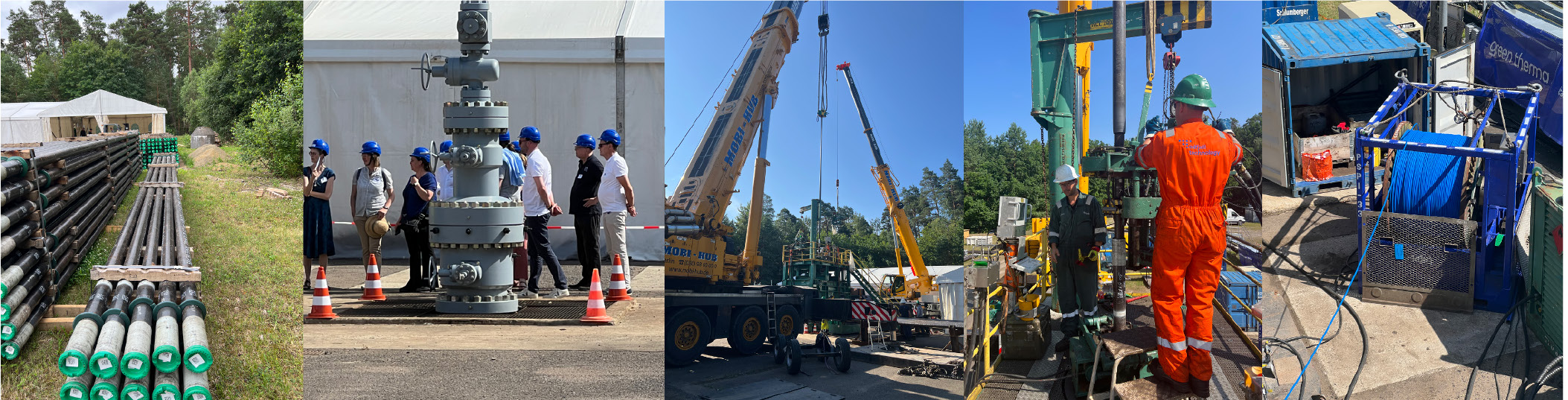
A full installation of a vacuum-insulated pipe has been completed and is operational at the Groß Schönebeck site 50 km north of Berlin, managed by GFZ Helmholtz-Zentrum für Geoforschung in Potsdam (Figure 1). The overall performance of the formation’s thermal conductivity and the vacuum-insulated pipe will be evaluated over a one-year period (Maver et al., 2026b).
Impact on the Energy Transition
Enclosed Loop Geothermal has many benefits.
Conventional hydrothermal wells carry exploration-style risk: a well can fail to find sufficient permeability or fluid, and raising this risk capital can be particularly challenging for private-sector geothermal developers (IEA, 2024). An enclosed-loop design removes that failure mode — output depends on known engineering parameters (depth, horizontal length, rock conductivity) rather than an uncertain reservoir. That converts geothermal from a resource-discovery risk into an engineering and execution risk, a category lenders already know how to price.
Lenders can size debt against a performance range that can be modelled instead of demanding the equity premium subsurface uncertainty usually commands, opening the door to instruments like performance guarantees and contracted-output debt that are hard to write against a well that might come up dry.
Because well design isn’t tied to site-specific reservoir traits, drilling and completion can be standardised across projects rather than requiring a bespoke subsurface study each time — the same dynamic that drove down costs in onshore unconventional drilling (US Energy Information Administration, 2016) and more recently in geothermal drilling (Fervo Energy, 2024), where repeatable designs let each well benefit from lessons learnt from the last one.
Standardisation accelerates deployment. No lengthy resource-confirmation phase means projects move faster from site selection to first heat delivery, and multiple sites can be developed in parallel rather than sequentially.
The market expands because viable sites are no longer limited to places with favourable natural geology (Liu and Dahi Taleghani, 2026) and any location becomes a potential candidate.
Predictable output, a long operating life, and low OPEX give the asset a profile closer to regulated infrastructure than a commodity-exposed power plant — exactly the long-duration, contracted-cash-flow profile utilities and infrastructure investors look for, echoing how solar and wind attracted that same capital once they matured into standardised asset classes (Irena, 2020).
It is proposed that the new Enclosed Loop Geothermal category — Generation 5 of the Closed Systems track — has the attributes to become the dominant geothermal design, making it possible to utilise the geothermal resource universally. Ongoing developments and new projects should further prove the proposed Generation 5 geothermal technology and its importance to the geothermal industry.
References
- Alimonti, C., Soldo, E., Bocchetti, D., and Berardi, D. (2018): The wellbore heat exchangers: A technical review. Renewable Energy, 123, 353–381.
- Anderson, P. and Tushman, M. L. (1990): Technological discontinuities and dominant designs: A cyclical model of technological change. Administrative Science Quarterly, 35(4), 604–633.
- Avgoustaki, D. D. and Bartzanas, T. (2022): A Systematic Literature Review on Controlled-Environment Agriculture: How Vertical Farms and Greenhouses Can Influence the Sustainability and Footprint of Urban Microclimate with Local Food Production. Atmosphere, 13(8), 1258.
- Brown, C. S., Kolo, I., Chen, C., Cai, W. and Falcone, G. (2026): Understanding Heat Transfer in ‘J-type’ Deep Borehole Heat Exchangers. World Geothermal Congress 2026, Calgary, poster 833616.
- Bundesverband Geothermie (2026): Geretsried – Geothermal plant. Available here.
- Cariaga, C. (2024): Geothermal plants in Bavaria, Germany recognized for performance, efficiency, ThinkGeoEnergy, 28 October. Available here.
- Cecere, G., Corrocher, N. and Battaglia, R. D. (2015): Innovation and competition in the smartphone industry: Is there a dominant design? Telecommunications Policy, 39(3-4), 162-175.
- Chen, H., and Tomac, I. (2023): Technical review on coaxial deep borehole heat exchanger. Geomechanics and Geophysics for Geo-Energy and Geo-Resources, 9, 120.
- Dijkshoorn, L., Speer, S., and Pechnig, R. (2013): “Measurements and Design Calculations for a Deep Coaxial Borehole Heat Exchanger in Aachen, Germany.” International Journal of Geophysics, 2013, Article ID 916541, 1–14.
- Dutch, S. I. (2021): First Geothermal Power Plant Begins Operation. EBSCO Research Starters.
- Eavor Technologies (2025): Eavor Technologies Achieves First Electricity Production at Geretsried Site. Press release, 4 December 2025. GlobeNewswire.
- Energy Transitions Commission (2026): Beneath the Surface: Geothermal’s Role in Delivering Clean Heating, Cooling and Power. Insights Briefing, published 22 July 2026. System analysis for the Energy Transitions Commission.
- Fercho, S., Matson, G., McConville, E., Rhodes, G., Jordan, R. and Norbeck, J. (2024): Geology, Temperature, Geophysics, Stress Orientations, and Natural Fracturing in the Milford Valley, UT Informed by the Drilling Results of the First Horizontal Wells at the Cape Modern Geothermal Project. Proceedings, 49th Workshop on Geothermal Reservoir Engineering, Stanford University, Stanford, California, February 12-14, 2024, SGP-TR-227.
- Fervo Energy (2024): Fervo Energy Drilling Results Show Rapid Advancement of Geothermal Performance.
- Garud, R. and Karnøe, P. (2003): Bricolage versus breakthrough: distributed and embedded agency in technology entrepreneurship. Research Policy, 32(2), 277-300.
- Geothermal DHC (2021): Chaudes-Aigues: The First Documented Geothermal District Heating System in France. Geothermal-DHC. eu, 15/11/2021.
- Geothermal Stories (2021): 2,000 Years of Geothermal in Larderello, Italy.
- Gutiérrez-Negrín, L. C. A. (2024): Evolution of Worldwide Geothermal Power 2020–2023. Geothermal Energy, 12, 6.
- IADC (2025): Geothermal Well Classification, Issue 1.0, 17 February.
- Idaho Governor’s Office of Energy Resources (2008): Idaho Geothermal History – A Detailed History. Boise, ID.
- IEA (2024): The Future of Geothermal Energy. International Energy Agency, Paris.
- IEA (2025): Renewables 2025 – Renewable Electricity. International Energy Agency, Paris.
- IEA (2026): Global Energy Review 2026 – Key Findings. International Energy Agency, Paris.
- Irena (2020): Mobilising Institutional Capital for Renewable Energy. International Renewable Energy Agency, Abu Dhabi.
- Kamila, Z., Kaya, E. and Zarrouk, S. J. (2021): Reinjection in Geothermal Fields: An Updated Worldwide Review 2020. Geothermics, 89, 101970.
- Kohl, T., Brenni, R. and Eugster, W. (2002): System performance of a deep borehole heat exchanger. Geothermics, 31(6), 687-708.
- Kolo, I., Brown, C. S., Nibbs, W., Cai, W., Falcone, G., Nagel, T. and Chen, C. (2024): A comprehensive review of deep borehole heat exchangers (DBHEs): subsurface modelling studies and applications. Geothermal Energy, 12 (1), 19.
- Liu, S. and Dahi Taleghani, A. (2026): Closed-Loop Geothermal Systems: Critical Review of Technologies, Performance Enhancement, and Emerging Solutions. Renewable and Sustainable Energy Reviews, 225, 116177.
- Lorenzen, S. B. (2025): Revolutionizing District Heating for a Sustainable Future – A case study from Aarhus, Denmark. Hot Cool, 3/2025.
- Mathiesen, T., Nielsen, J. B., Shoeibi Omrani, P., Wasch, L., Dideriksen, K., Kristensen, L., Holmslykke, H., Kjøller, C. and Regenspurg, S. (2021): Best Practice for Geothermal Plants to Minimize Scaling and Corrosion. PERFORM Project Deliverable D4.01, 2 November. Force Technology, TNO, GEUS (Geological Survey of Denmark and Greenland) and GFZ Helmholtz Centre for Geosciences.
- Maver, K. G. (2025): Vacuumized Pipe-in-Pipe Solution for Efficient Geothermal Heat Extraction Everywhere for District Cooling and Heating and Industrial Usage, Proceedings, 50th Stanford Geothermal Workshop, Stanford, USA.
- Maver, K. G., Hanna, C., Eegholm, M. E. and Nissen, N. H. (2026a): Deep geothermal energy for direct use in district heating. Hot Cool Magazine, 24-28.
- Maver, K. G., Hanna, C., Nissen, N. H., Hofmann, H., Tegeler, R. and Sass, I. (2026b): Repurposing A Geothermal Well With A Closed Loop Vacuumized Pipe-In-Pipe Solution. World Geothermal Congress, Calgary, Canada, 8-11 June.
- Maver, K. G., Kalogirou, A., Nielsen, S. B. and Balling, N. (2026c): From thermal structure to heat output: Subsurface assessment for deep borehole heat exchangers. First Break, 44 (7), 57–62.
- Rystad Energy (2026): Geothermal Trends Report 2Q. Next-generation geothermal accelerating as more skilled firms enter field. 54 pp.
- Rystad Energy and ThinkGeoEnergy (2026): Geothermal at an inflection point. Market dynamics, technology evolution and growth pathways. June. 45 pp.
- Tangirala, S. K. and Vilarrasa, V. (2025): On the limitations of closed-loop geothermal systems for electricity generation outside high-geothermal gradient fields. Communications Engineering, 4, Article 116.
- Tester, J. W., Anderson, B. J., Batchelor, A. S., Blackwell, D. D., DiPippo, R., Drake, E. M., Garnish, J., Livesay, B., Moore, M. C., Nichols, K., Petty, S., Toksöz, M. N., Veatch, R. W., Baria, R., Augustine, C., Murphy, E., Richards, M. and Negraru, P. (2006): The Future of Geothermal Energy: Impact of Enhanced Geothermal Systems on the United States in the 21st Century. Massachusetts Institute of Technology / Idaho National Laboratory, U.S. Department of Energy.
- Thomas, M. (2023): Harnessing the Heat Beneath Our Feet: Geothermal’s Past and Future. Canary Media, 14 December 2023 (originally published on Distilled).
- Toth, A. N., Antics, M., Csrefko, T. and Fenerty, D. K. (2025): The Geothermal District Heating Market: Challenges and Opportunities in Europe. Proceedings, 50th Workshop on Geothermal Reservoir Engineering, Stanford University. February 10-12.
- U.S. Department of Energy (2019): GeoVision: Harnessing the Heat Beneath Our Feet — Chapter 2: What is Geothermal Energy?. Office of Energy Efficiency & Renewable Energy, Geothermal Technologies Office, Washington, DC, 36-37.
- U.S. Energy Information Administration (2016): Trends in U.S. Oil and Natural Gas Upstream Costs. U.S. Department of Energy, EIA, Washington, DC, 23 March.
- Van Liedekerke, A., Hefny, M., Gjorgiev, B., Garrison, J., Savelsberg, J., Saar, M.O. and Sansavini, G. (2026): The role of deep closed-loop advanced geothermal systems in the future net-zero Swiss power system. Applied Energy.
- Zhou, W., Lanza, F., Grigoratos, I., Schultz, R., Cousse, J., Trutnevyte, E., Muntendam-Bos, A. and Wiemer, S. (2024): Managing Induced Seismicity Risks From Enhanced Geothermal Systems: A Good Practice Guideline. Reviews of Geophysics, 62, e2024RG000849.

