
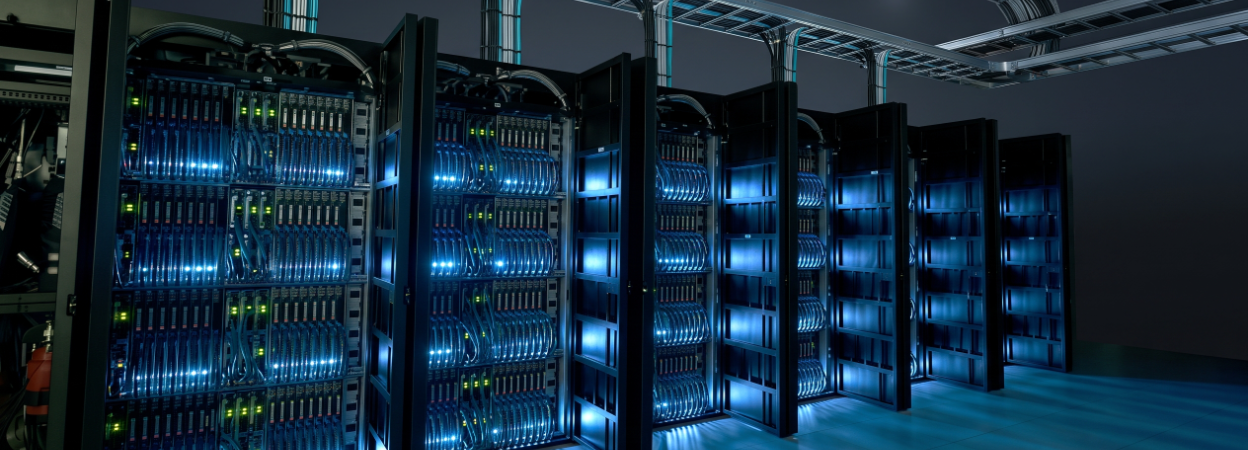
Europe’s energy and subsurface challenges - energy security, geothermal scale-up, and safe, bankable carbon storage - now have a new lever: AI supercomputing. Just as Microsoft and PNNL employed AI combined with high‑performance computing to screen 32 million materials and identify promising battery chemistries within 80 hours (microsoft), geoscientists and engineers can now carry out years’ worth of reservoir studies, seismic inversions, and CCUS risk assessments in as little as days - or even hours. The real question for Europe is not whether this is feasible, but rather, which organisation will take the lead.
This is exactly why the Seventh EAGE Digitalization Conference, taking place in Milan next year, has introduced a new dedicated technical topic on AI Supercomputing - specifically tailored for the scientists, engineers, and data scientists in operators, service companies, regulators, and academia who build and use digital energy and subsurface solutions.
This is not a generic “AI in energy” track - it encompasses the full stack that is relevant to actual workflows: HPC for digital geosciences and computational science; machine learning and AI; advanced compute methods (mixed precision, edge, accelerators); quantum computing; high‑performance cloud; HPC applications for the energy transition; systems management and performance evaluation; open‑source, partnerships and collaboration; sustainability and energy efficiency; showcases of supercomputers and systems; AI coding, agents and orchestration; cybersecurity, safety and ethics; and case studies with standards and best practices.
These are not abstract research themes - they map directly to business outcomes: shorter cycle times from prospect to investment decision, lower costs, and more credible, explainable models for permitting and financing.
For Roderick Perez, Senior Expert Geoscientist at OMV and a member of the conference's Technical Committee, the challenge now is "building strong geoscience/engineering fundamentals while mastering AI", yet he sees conference presentations as a way to validate hypotheses faster and help "integrate digital tools as tutors" that accelerate safe, robust progress in the field.
That same tension between technical depth and adoption-speed shows up on the compute side too. Martin Aray, Principal Reservoir Engineer at Stone Ridge Technology and a member of the conference's AI Supercomputing Committee, points to how GPU-accelerated computing and increasingly complex reservoir models are opening up "faster and more sophisticated subsurface simulations". He argues that sharing new research is what accelerates "innovation, collaboration and the adoption of HPC" across the industry.
The timing is critical. Europe is actively deploying AI‑optimised supercomputers under EuroHPC (EurohpcJU; Europa), including new “AI factory” systems that will dramatically expand sovereign capacity for AI‑for‑science workloads (Digital strategy Europa;AI Gigafactories). At the same time, national competence centres are pushing to broaden HPC adoption across domains (HPC), creating a window for geoscience consortia to shape access programmes and priority use cases.
This shift in infrastructure is already visible on the ground. Yuriy Gubanov, Worldwide Principal Partner Solutions Architect - Energy at AWS, also a member of the conference's AI Supercomputing Committee, describes energy HPC as moving "from on-premises clusters to hybrid and cloud-native orchestration platforms" that enable multipartner collaboration - architectures he says demonstrate how cloud HPC can "dramatically compress processing timelines."
EAGE Digitalization is designed to turn these themes into contacts, collaborations, and concrete next steps. You will find keynote and invited speakers from major operators, technology providers, and research institutions; technical talks and posters that show what works (and what doesn’t).
Get Involved
The Seventh EAGE Digitalization Conference and Exhibition takes place 15-18 March 2027 in Milan, Italy. The Call for Abstracts is open now, with submissions accepted until 1 November 2026, 23:59 (GMT+1). Geoscientists, engineers, and data scientists working on AI Supercomputing or any of the conference's other technical topics can submit an abstract through the online submission portal, and find full details at the event website.
Image courtesy of Eni

