
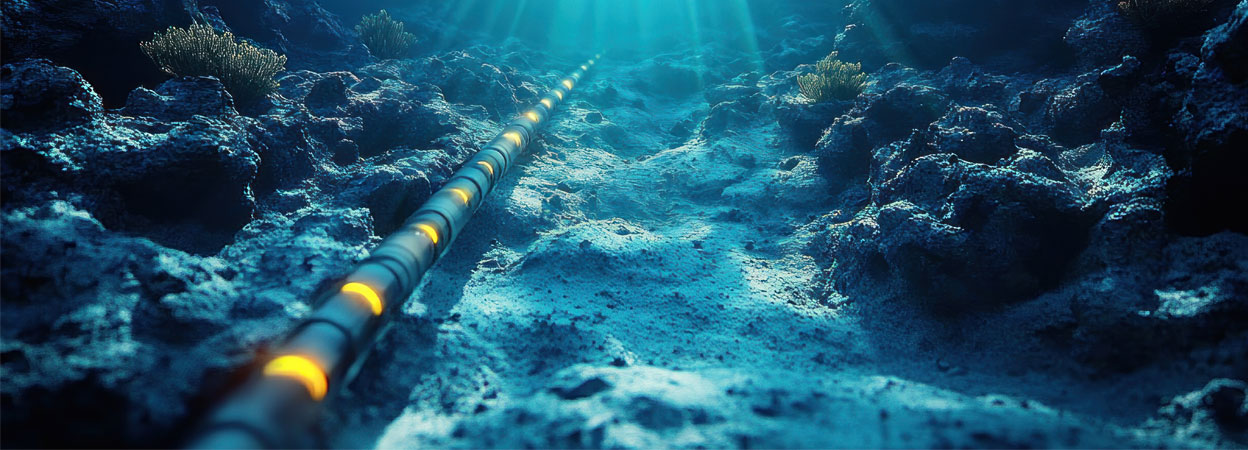
Subsea power and telecommunications cables are critical to offshore energy systems and global connectivity, yet they remain vulnerable to hazards such as anchor strikes, fishing activity and seabed change.
New research led by the British Geological Survey (BGS), in collaboration with Durham University and the University of Dundee, demonstrates that the shallow North Sea seabed is far more geologically complex than is often assumed in current cable burial approaches. By analysing more than 12,000 geological records, the team found that layered soil conditions are widespread, with significant implications for cable routing, installation and long-term protection.
The findings highlight the value of detailed near-surface geological characterisation for reducing installation risks, improving cable burial strategies and supporting the resilience of offshore energy and communications infrastructure.
As offshore wind, interconnectors and digital connectivity continue to expand, integrating geoscience into infrastructure planning will become increasingly important.

