
As geoscientists, we are accustomed to working across boundaries. The subsurface does not recognize disciplines, organizations, or national borders, and neither should the solutions to the challenges we face. Whether addressing energy security, supporting the energy transition, managing natural resources responsibly, or advancing scientific understanding of our planet, progress depends on collaboration.
“The subsurface does not recognize disciplines, organizations, or national borders, and neither should the solutions to the challenges we face.”
This message has been reinforced for me recently as I prepare to participate in the “Collaboration Across the Energy Industry” panel session at the 25th WPC Energy Congress in Riyadh. The session will bring together leaders from across the energy landscape to discuss how partnerships, knowledge sharing, and cross-sector cooperation can help deliver practical solutions for a balanced and inclusive energy future.
For EAGE, collaboration has always been more than a theme. It is embedded in our identity. Our global community thrives because of the contributions of volunteers, technical communities, local chapters, student chapters, and the many organizations with which we work. Every conference, workshop, publication, educational programme, and outreach activity is strengthened when diverse perspectives come together around a shared objective.
One of the most important examples of this spirit is our growing engagement with associate societies and partner organizations. Across the world, these societies bring deep local expertise, strong professional networks, and unique insights into regional challenges. By working together, we extend the reach of our collective knowledge while creating opportunities for members to engage beyond traditional disciplinary boundaries. The challenges facing our industries are increasingly interconnected, and our professional communities must be equally connected.
Collaboration is also becoming essential in how we manage knowledge itself. The volume of technical information available to geoscientists continues to expand at an extraordinary pace. Finding relevant insights within decades of papers, presentations, reports, and case studies can be challenging. This is why I am particularly excited about initiatives such as EarthDoc AI, which has the potential to transform how our community discovers and interacts with technical knowledge. By helping users navigate vast repositories of geoscience content more effectively, EarthDoc AI can support faster learning, more informed decision-making, and greater accessibility of expertise across generations of professionals.
“Scientific breakthroughs, technological innovation, and industry transformation are rarely the result of isolated effort.”
Importantly, technologies such as AI do not replace collaboration; they amplify it. They help connect people with ideas, connect disciplines with expertise, and connect today's challenges with decades of accumulated knowledge. In doing so, they strengthen one of EAGE's core missions: enabling the exchange of knowledge for the benefit of our profession and society.
As I look ahead to discussions at the WPC Energy Congress and to the many EAGE activities planned in the coming months, I am reminded that our greatest achievements have always come from working together. Scientific breakthroughs, technological innovation, and industry transformation are rarely the result of isolated effort. They emerge when communities share knowledge openly, challenge assumptions constructively, and collaborate with purpose.
In an increasingly complex world, geoscience has an important role to play. By strengthening partnerships with our associate societies, embracing new tools such as EarthDoc AI, and actively engaging with the broader energy community, we can ensure that our profession remains relevant, impactful, and prepared for the challenges ahead.
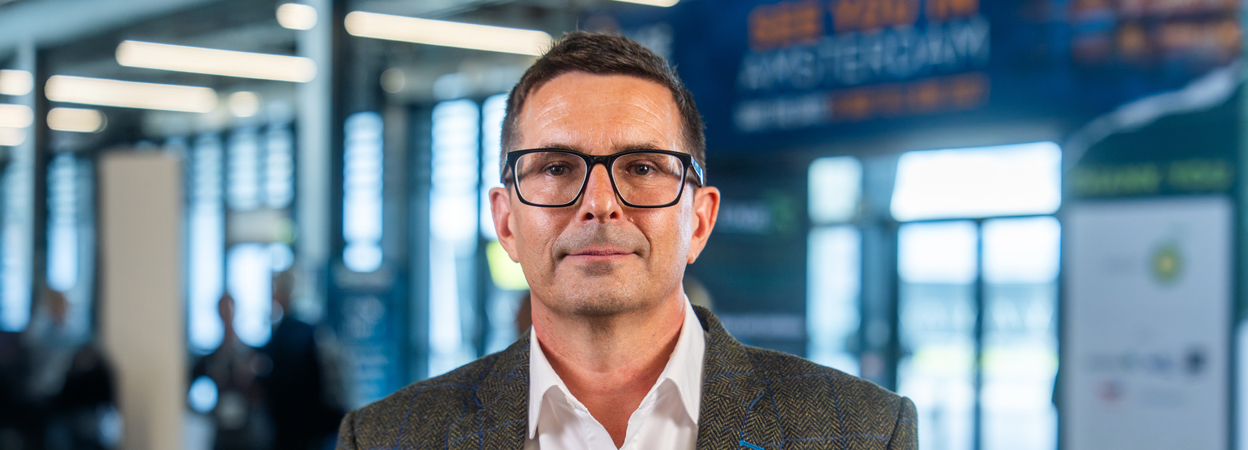
Mike Branston is EAGE's 2026-2027 President. He is New Energy Domain Lead at SLB based in Kuala Lumpur, Malaysia.

