
For decades, exploration across much of Southeast Asia has understandably been drawn to the younger and better-imaged Miocene petroleum systems. It has delivered—and continues to deliver. But as these established plays mature, the industry increasingly needs to look deeper, both literally and conceptually.
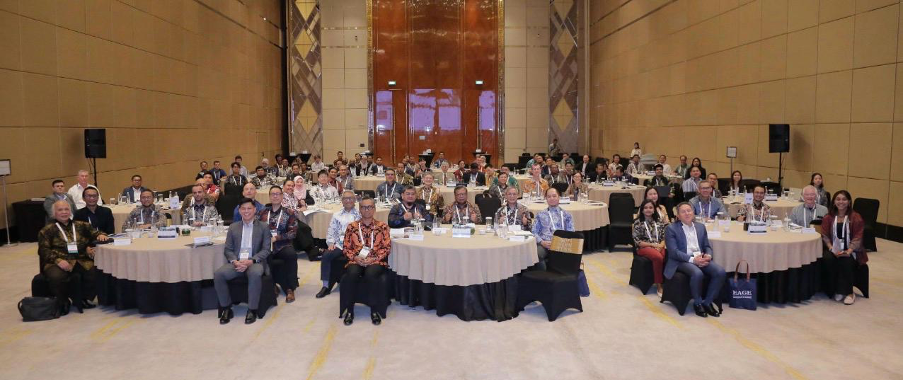
That was perhaps the strongest message emerging from the EAGE Workshop on Exploration and Opportunities in the Paleogene Play, convened on 28–29 July 2026 in Jakarta, Indonesia. Bringing together 143 delegates representing 54 organisations across 19 countries, the workshop highlighted robust international and regional interest in unlocking Southeast Asia's high-potential Paleogene petroleum system. Interest in the Paleogene is no longer confined to isolated basin studies; it is becoming a regional exploration conversation.
The rocks were always there. Our ability to image and understand them has changed.

The Paleogene play has historically carried a difficult reputation: deeper targets, sparse well calibration, uncertain age control, poorer seismic imaging, higher drilling costs, overpressure and concerns over reservoir quality. Against abundant opportunities in shallower Miocene plays, there was often little reason to take those additional risks. The workshop showed why that perception is changing.
In the deepwater North Sumatra Basin, broadband 3D seismic and reprocessed legacy data are now revealing Paleogene syn-rift half-grabens, structural closures and hydrocarbon indicators that were previously difficult to resolve. Recent discoveries provide further evidence of an effective syn-rift petroleum system. In the Malay Basin, improved biostratigraphic calibration is strengthening basin-wide correlation of the Late Eocene–Oligocene syn-rift succession, while AI-assisted full-volume seismic interpretation is helping connect structural evolution with the prediction of reservoir, source and seal distribution.
Technology is therefore doing more than producing better pictures. Advanced seismic imaging and reprocessing, rock physics and inversion, AI-assisted interpretation, 3D petroleum-system modelling and improved geochemical calibration are beginning to turn previously broad geological possibilities into testable play concepts. The workshop appropriately complemented these subsurface advances with the realities of drilling—pore pressure, narrow mud windows, wellbore stability and deepwater operations.
There was also an important geological lesson: deep does not automatically mean poor reservoir. Work from the North Malay Basin demonstrated viable porosity at significant depths, influenced by overpressure and dissolution, while regional carbonate studies highlighted how facies, diagenesis and fractures can preserve or enhance reservoir performance. The implication is important. Some of the assumptions that historically downgraded the Paleogene deserve to be tested again with today's data and technology.
From individual prospects to a regional play
Perhaps the bigger opportunity, however, lies beyond any single basin. Evidence presented from Sumatra, Java, Kalimantan, the Malay Basin, Sarawak and the wider Asia-Pacific points toward a Paleogene exploration fairway much larger than individual country portfolios. Regional synthesis at the workshop extended that picture from the Andaman Sea and Indonesia through Malaysia to Vietnam and the South China Sea margins. The emerging proposition is that Paleogene successions could become one of Asia-Pacific's principal next-cycle exploration targets, particularly where conventional Miocene portfolios are becoming mature.
That should change how we approach the opportunity.
The next phase should not simply be a collection of companies drilling deeper prospects independently. It should be about opening the Paleogene as a regional play: connecting tectonic frameworks across political boundaries, correlating source and reservoir systems, learning systematically from wells and near-misses, improving seismic imaging together, and identifying where geological concepts proven in one basin can unlock another.
This is why the EAGE workshop matters beyond the two days in Jakarta. Its panel discussions explicitly brought frontier-play de-risking, sub-volcanic imaging and cross-operator data sharing into the same conversation. It created a platform where governments, operators, service companies and geoscientists could begin looking at the Paleogene not simply as a collection of difficult deep targets, but as a shared regional exploration challenge.
In recognition of technical excellence, five presenters were selected for the prestigious Top 5 Presenter Awards, to be formally honoured at APGCE 2026: Dr Tad Choi (TGS), Dr Barry Majeed Hartono (RITE), Peter Lunt (Stratis Energy Advisors), Sapinah Saleh (Eliis) and Prillia A. (Searah Limited).
The workshop's success was made possible through the generous support of its host organisations and industry sponsors: SKK Migas (Official Supporter), Ministry of Energy and Mineral Resources/ESDM (Endorsing Organisation), PETRONAS (Strategic Partner), SLB (Platinum Sponsor), Rock Flow Dynamics and PT Medco Energi (Gold Sponsors), Halliburton (Lanyard Sponsor), GeoSoftware (Technical Programme Sponsor), and DUG (Company Display Sponsor).
Special appreciation is extended to Workshop Chairman Ir. Arya Disiyona, ST, IPU (SKK Migas) and Co-Chairman Herry Maulana (PETRONAS) for their strategic leadership, as well as to the Advisory and Technical Programme Committee for curating a high-calibre technical programme that positions Jakarta as a central hub for Paleogene exploration dialogue.

The foundation is now stronger. The geological evidence is accumulating, the technology is catching up, and successful tests are progressively changing our perception of risk. What is needed next is momentum: regional play mapping, targeted data improvement, knowledge sharing, technology deployment and, ultimately, wells.
The workshop has provided the impetus. The next step is to convert the conversation into a regional Paleogene action plan—and turn an underexplored interval into Southeast Asia's next exploration chapter.

